

Choosing your first grand South American adventure often comes down to two titans: Peru and Argentina. Do you prioritize ancient Inca history and world-class gastronomy, or the cosmopolitan flair of Buenos Aires and the dramatic icy landscapes of Patagonia?
This expert guide breaks down the essential factors—from costs and culture to comfort and must-see attractions—to help you decide which country deserves your booking first.
Quick Comparison: Peru vs. Argentina
Feature | Peru: The Ancestral Heart | Argentina: The Grand Scale |
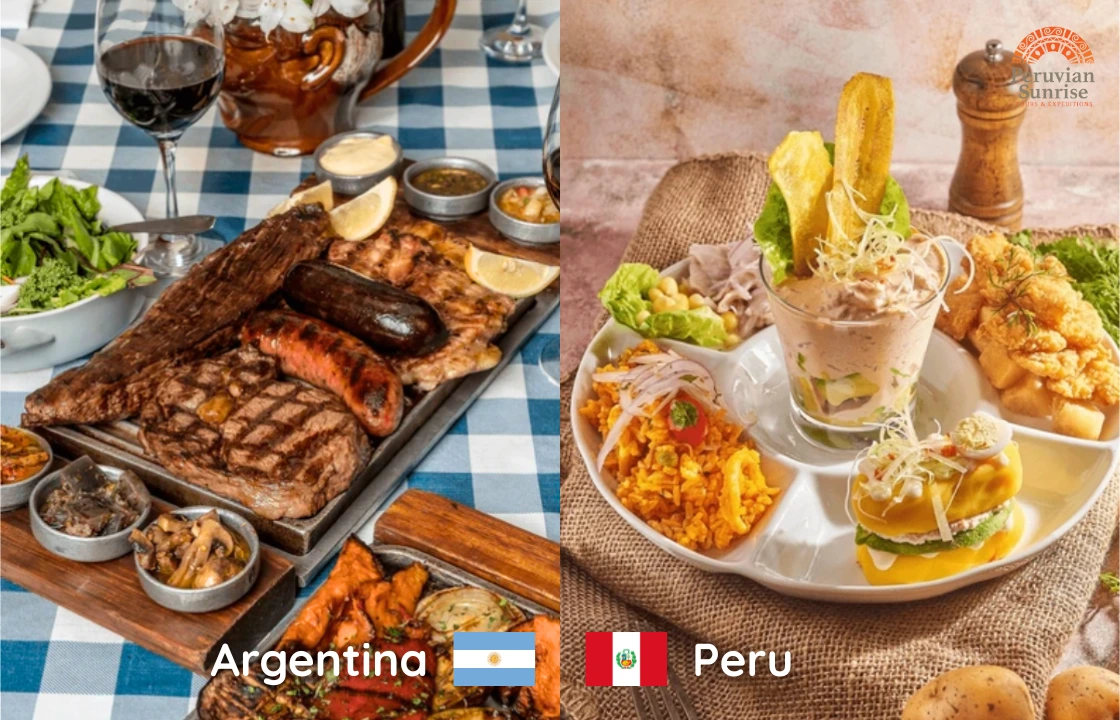
| Culture Focus | Ancient Inca Heritage, Andean traditions, Revolutionary Cuisine | European Influence, Tango, Gaucho culture, Metropolitan life |
| Travel Cost | Moderate (High cost for key sites like Machu Picchu) | Moderate (Higher cost for long-distance domestic travel) |
| Signature Vibe | Mystical, Historical, Gastronomic | Passionate, Cosmopolitan, Diverse, Epic Scales |
| Key Attractions | Machu Picchu, Cusco, Lima, Amazon Rainforest | Iguazu Falls, Buenos Aires, Patagonia (Glaciers/Trekking) |
| Best For | History Lovers, Foodies, Trekkers, Cultural Immersion | Wine Lovers, City Explorers, Nature Photographers, Outdoor Adventure |
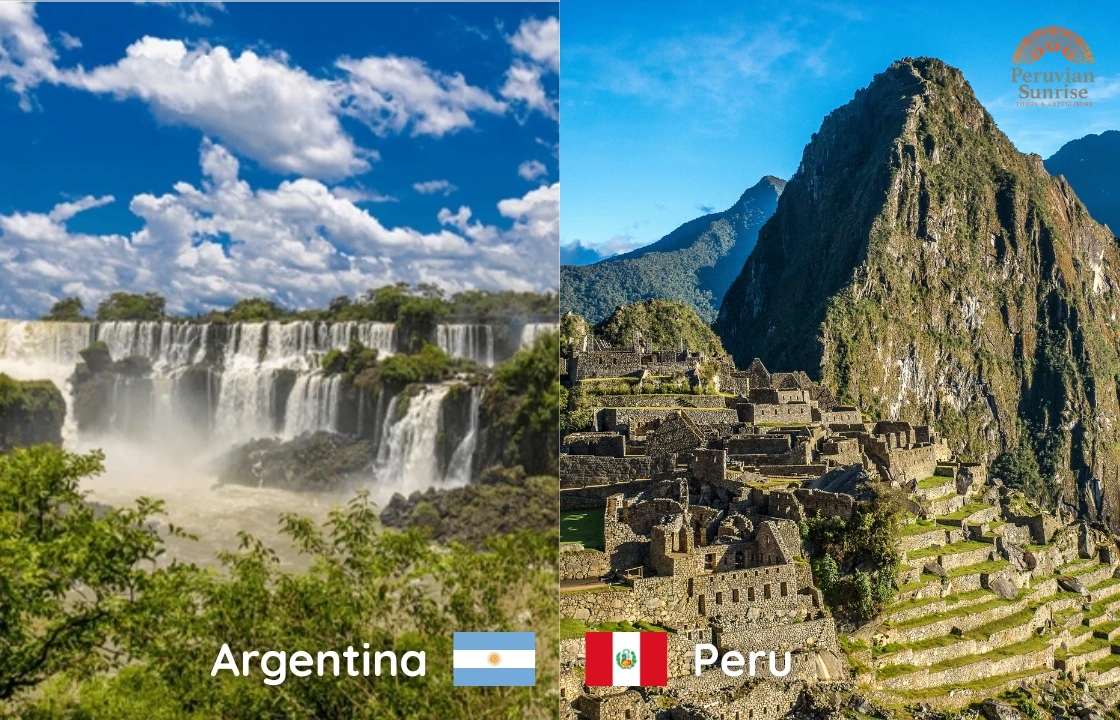
Culture and Heritage: What Makes Each Country Unique
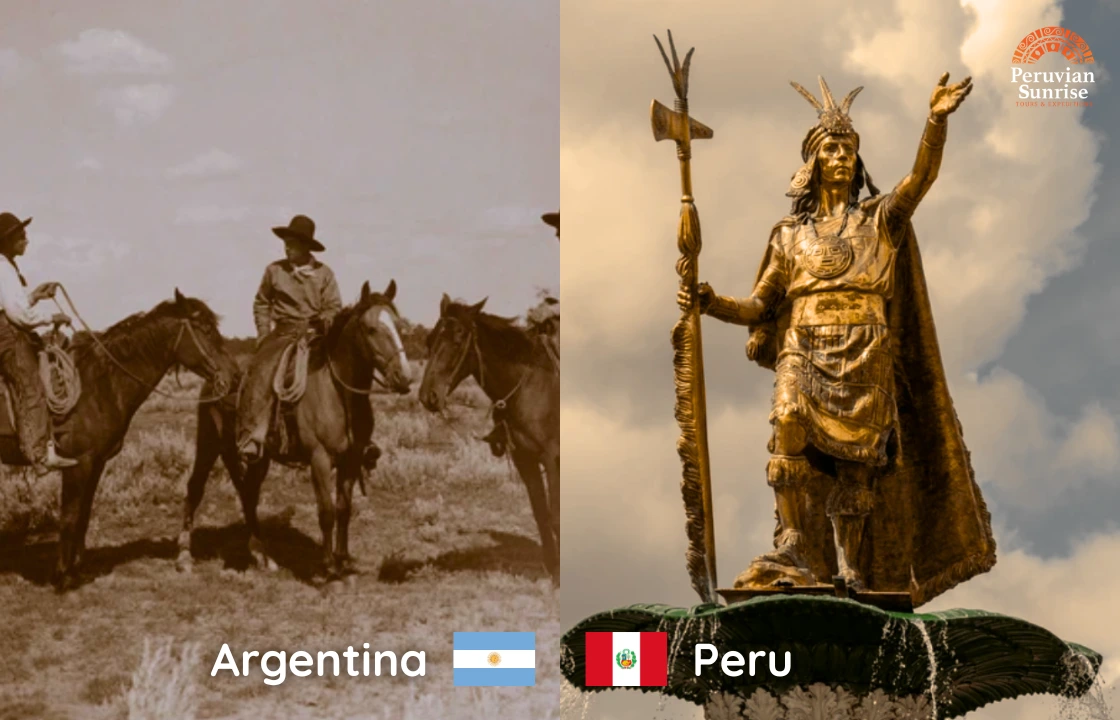
Peru (Inca Heritage): Peruvian culture is inextricably linked to the Inca Empire. Travelers seeking deep archaeological immersion and indigenous history are drawn to sites like Machu Picchu and the Sacred Valley. This destination is about tracing ancient footprints and experiencing a culture that holds history in high regard.
Argentina (European & Gaucho Roots): Argentina's culture has a distinctly European flavor, heavily influenced by Italian and Spanish immigration. Its unique character lies in the urban elegance of Buenos Aires (the capital of Tango), combined with the rugged, frontier spirit of the Gaucho (cowboy) and the expansive Pampas.
Is Peru or Argentina Cheaper? Travel Cost Comparison
Both countries fall into the moderate price range for South America, but the costs are distributed differently, which impacts your overall South America trip price:
Peru's High Costs: While food and local transport can be affordable, key attractions and necessary logistics drive up the price. A Machu Picchu tour (including entrance, train, and bus tickets) represents a significant, unavoidable expense.
Check our Peru Tours Here!
Argentina's High Costs: Accommodation and dining in Buenos Aires are comparable to major North American/European cities. The main cost factor is domestic travel; Argentina's massive size means flights between Buenos Aires, Patagonia, and Iguazu are often necessary and can be expensive.
Check our Argentina Tour Here!
Altitude in Peru vs. Argentina: What Travelers Need to Know
Managing elevation is primarily a Peruvian concern, making Peru a more challenging start for high-altitude sensitivity:
Peru (High-Altitude Challenge): The most popular destinations, Cusco (3,400m / 11,155 ft) and Puno (3,800m / 12,467 ft), are at high altitudes, requiring acclimatization.
Argentina (Low-Altitude Ease): Most major tourist hubs—Buenos Aires, Iguazu, and the Patagonian towns of El Calafate and Ushuaia—are at low elevations (near sea level). Only the Andean regions (like Mendoza and Salta) pose an altitude challenge, making overall travel much easier from a physiological standpoint.
Safety, Comfort, and Ease of Travel for Tourists
Peru (Developed Tourist Circuit): Peru is highly organized for tourism, especially along the established routes (Lima-Cusco-Arequipa). You will find comfortable all-inclusive South America travel options and specialized tourist services, making it generally easier for first-time South America trip planners.
Argentina (High Comfort, Long Distances): Argentina offers excellent quality infrastructure (hotels, restaurants) in its major cities, often feeling the most "Western" of the two. However, the vast distances require more intricate planning South America travel logistics, often involving multiple domestic flights.
Best Things to Do: Must-See Attractions and Experiences
Peru Must-Sees | Argentina Must-Sees |
Machu Picchu: The quintessential Inca pilgrimage. | Iguazu Falls: One of the world's most spectacular waterfalls. |
Lima Gastronomy: Dining at world-renowned restaurants. | Patagonia Glaciers: Exploring the Perito Moreno Glacier near El Calafate. |
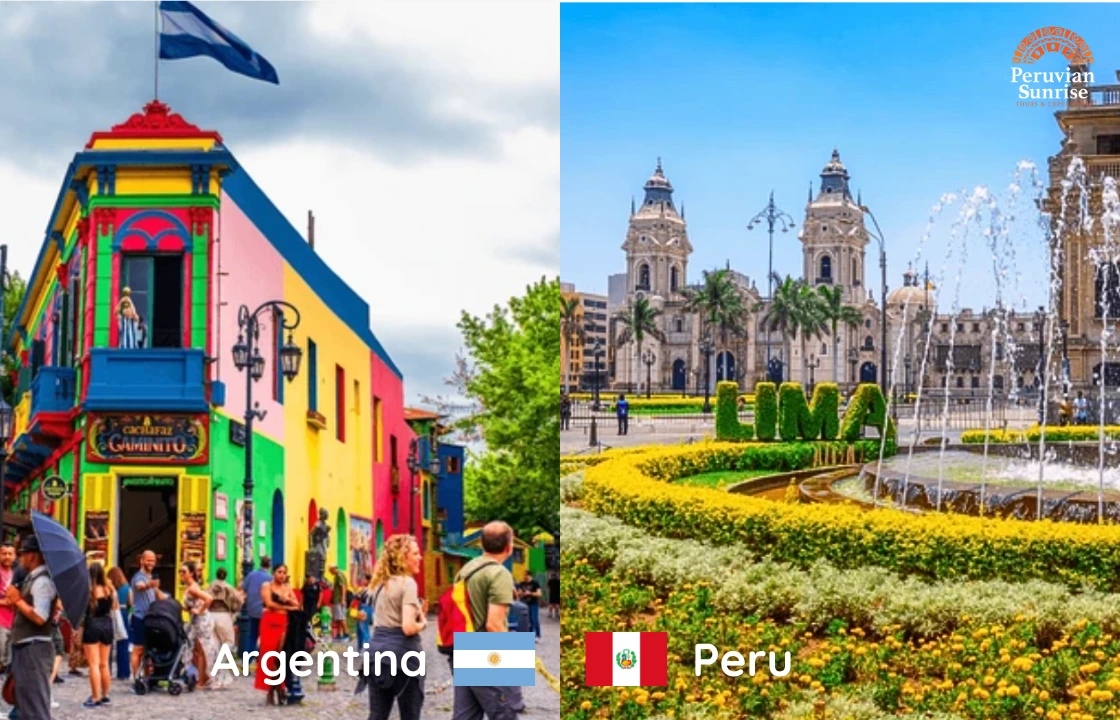
Sacred Valley: Exploring Inca fortresses and local markets. | Buenos Aires Culture: Enjoying a world-class Tango show and visiting the streets of Caminito |
Peru vs. Argentina: The Best Choice for First-Time Travelers
Choose Peru if: Your primary goal is to see ancient wonders and you prioritize a concentrated cultural experience. The Lima/Cusco circuit is manageable and efficient.
Choose Argentina if: You want a mix of vibrant city life, dramatic natural wonders (Patagonia), and the easiest travel experience at sea level.
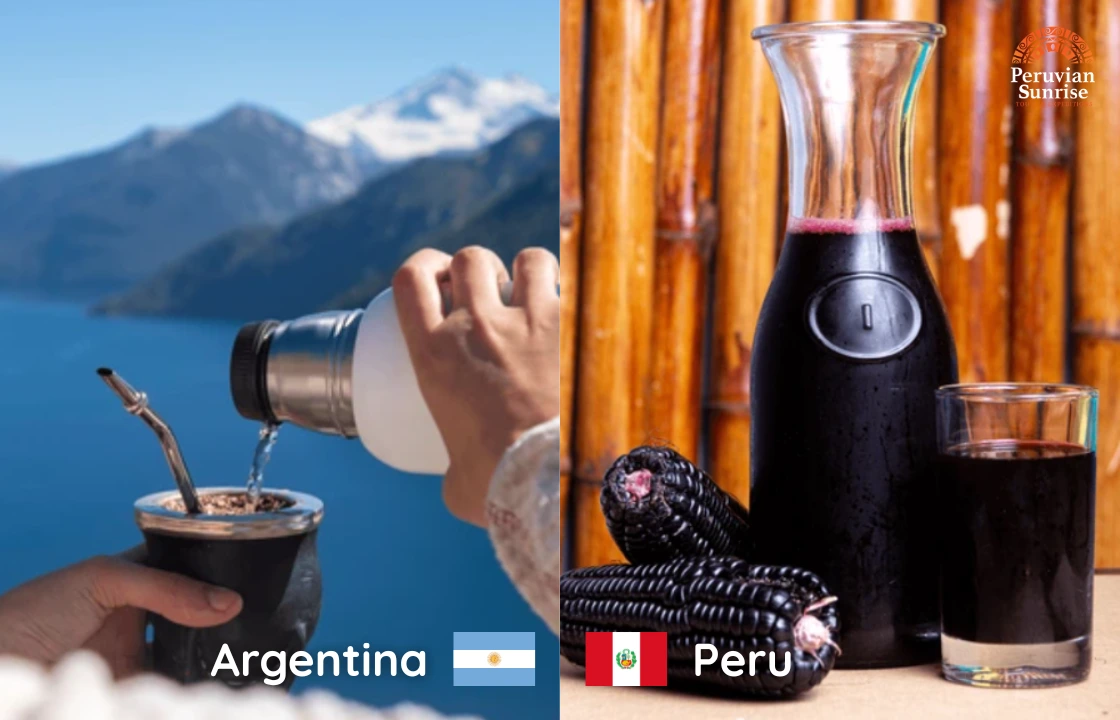
Visiting Peru and Argentina in One Trip
For the ultimate adventure, you don't have to choose! Our Peru and Argentina 14-day packages are designed to connect the most famous parts of both countries, usually combining the Machu Picchu tour with the highlights of Buenos Aires and Iguazu Falls. This is the best way to get a full flavor of the continent.
Traveler FAQs: Essential Questions Before You Book
Here are the answers to common questions travelers have when comparing these two South American giants:
What is the best currency to use for small purchases in each country?
In Peru, Peruvian Soles (PEN) are essential for markets and small vendors, though USD is often accepted for large tourism-related payments. In Argentina, the local currency (ARS) is needed, but the exchange rate system can be complex; having USD cash is often advantageous for the best "blue market" rate.
When is the best time to visit both Peru and Argentina on a single trip?
The shoulder seasons—April to May or September to October—are ideal. You'll catch pleasant weather for trekking in Peru and avoid the coldest winters (Patagonia) or hottest summers (Iguazu/Buenos Aires) in Argentina, maximizing your comfort.
Is Spanish necessary for travel in these destinations?
While major tourist hubs in both countries have guides and staff who speak English, having basic Spanish skills greatly enhances your experience. In Peru, knowing Spanish helps with negotiations in markets. In Argentina, it facilitates better social and cultural interactions in Buenos Aires.
Which country is better for nature and wildlife spotting?
Peru is superior for dense wildlife viewing due to the Amazon Rainforest (e.g., Puerto Maldonado or Iquitos), where you can easily spot monkeys, birds, and river species. Argentina excels in marine and grand landscape wildlife, particularly penguins, whales, and sea lions off the coast of Peninsula Valdés.
Maximize Your Adventure: Book a Combined Tour!
The only way to truly win the Peru vs. Argentina travel debate is to experience both. Our multi-destination tours eliminate the stress of complex logistics and high internal travel costs by pre-packaging the best sights.
Ready to explore? Don't just compare tour packages—secure your spot on a curated Andean and Patagonian journey.