
Hello, Dear reader! Quipus, also spelled “khipus”, were one of the most sophisticated information management systems of the ancient world. Using knotted cords of different colors, lengths, and patterns, the Inca Empire governed millions of people across western South America without ever developing a written alphabet. This article explains what quipus were, how they actually worked, and why they still fascinate researchers, travelers, and historians today.
Continue reading!
What Does Quipu Mean?
The word quipu (or khipu) comes directly from Quechua, the language spoken across the Inca Empire. It simply means "knot." That’s the whole word. But what those knots could hold, the scale of human knowledge encoded in twisted fiber, is anything but simple.
When Spanish colonizers arrived in the 16th century, they encountered bundles of colored cords hanging from a central cord, carried by official messengers across thousands of miles of mountain roads. Many had no idea what they were looking at. Some described them as strange decorations. In reality, they were administrative records, census data, and possibly historical accounts, a filing system for an empire.
What Were Quipus?
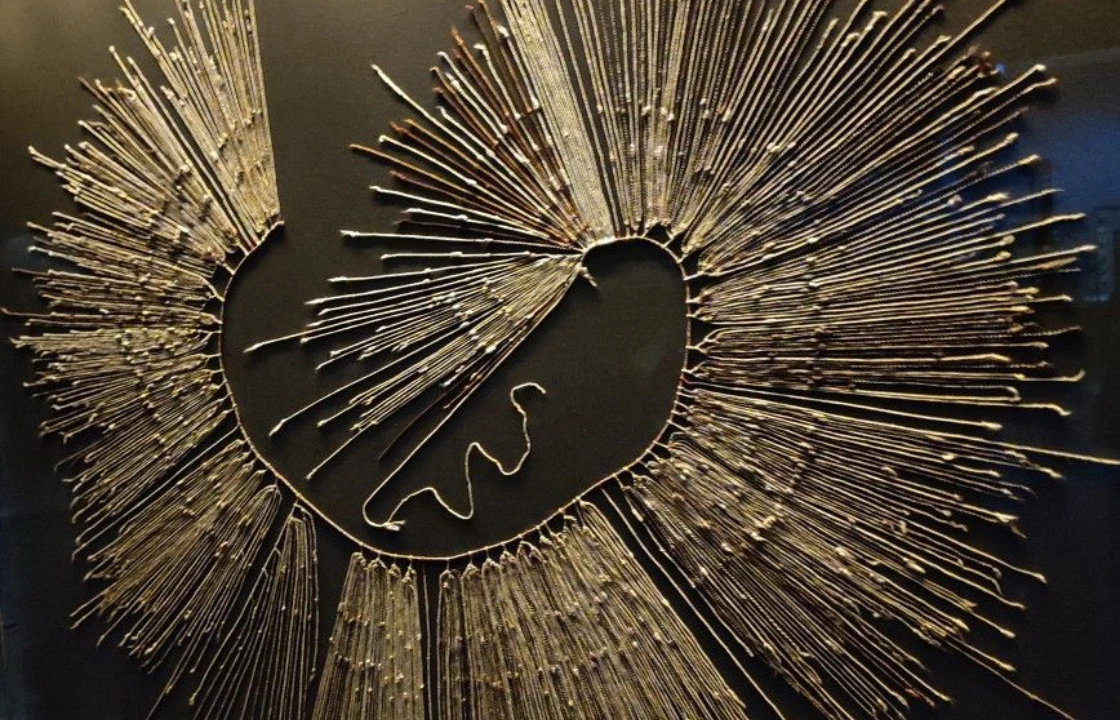
A quipu was a set of spun and plied cords, usually made from cotton or camelid fiber (llama or alpaca), attached to a thicker primary cord. Pendant cords hung from this main cord, and sometimes subsidiary cords hung from those, creating a hierarchical structure that mirrored the empire's own organizational logic.
At first glance, a quipu can look like a tangled fringe. But every detail was deliberate:
- The position of a knot on a cord indicated place value, ones, tens, hundreds, thousands, following a base-10 positional system
- The type of knot communicated specific numbers. Long knots (with multiple loops) represented values from 2 to 9. A figure-eight knot stood for 1. A single overhand knot was used in higher place positions. Critically, an absence of knots at a given position represented zero, one of the earliest practical uses of zero in the ancient world
- The color of the cord likely represented categories such as goods, provinces, types of labor, or demographic groups
- The number of subsidiary cords and their arrangement added further layers of organization
Some quipus were small and simple, recording a single count. Others were extraordinarily complex. The most elaborate examples contain more than a thousand individual cords, each carrying its own set of knots and colors.
How Did the Incas Use Quipus?
Quipus were not decoration and they were not prayer beads. They were working tools, the operational backbone of a state that stretched more than 4,000 kilometers from north to south, spanning modern-day Peru, Ecuador, Bolivia, Colombia, Chile, and Argentina.
Accounting and Resource Management
The most clearly understood use of quipus was accounting. The Inca state controlled the redistribution of food, textiles, and goods across an enormous network of storehouses (qollqas). Quipus tracked what was stored, where, and in what quantities, including agricultural harvests, herds of llamas and alpacas, raw materials, and finished textiles produced in state workshops.
Census and Population Records
Every province of the empire was regularly counted. The number of men, women, children, and elders in each community was recorded on quipus and sent up the administrative hierarchy to Cusco. This allowed the state to plan labor assignments, food distribution, and military recruitment with remarkable precision.
Tribute and the Mita Labor System
The Incas did not collect tribute in coins or gold, they collected it in labor and goods. Every household owed the state a fixed period of work each year through a system called mita. Quipus tracked these obligations, including who had served, in what capacity, for how long, and what was owed or credited. Road building, mining, farming on state lands, and military service were all recorded.
History, Law, and Cultural Memory
This is where it gets genuinely mysterious. Many researchers believe that some quipus went beyond numbers. Narratives, genealogies, laws, historical records, and ritual calendars may also have been encoded in the cords. In colonial documents, Spanish priests reported that certain quipus told the histories of Inca rulers. If true, this would mean quipus were not just a counting device but something closer to a complete record-keeping system, one we still do not fully understand.
Who Could Read Quipus? The Quipucamayocs
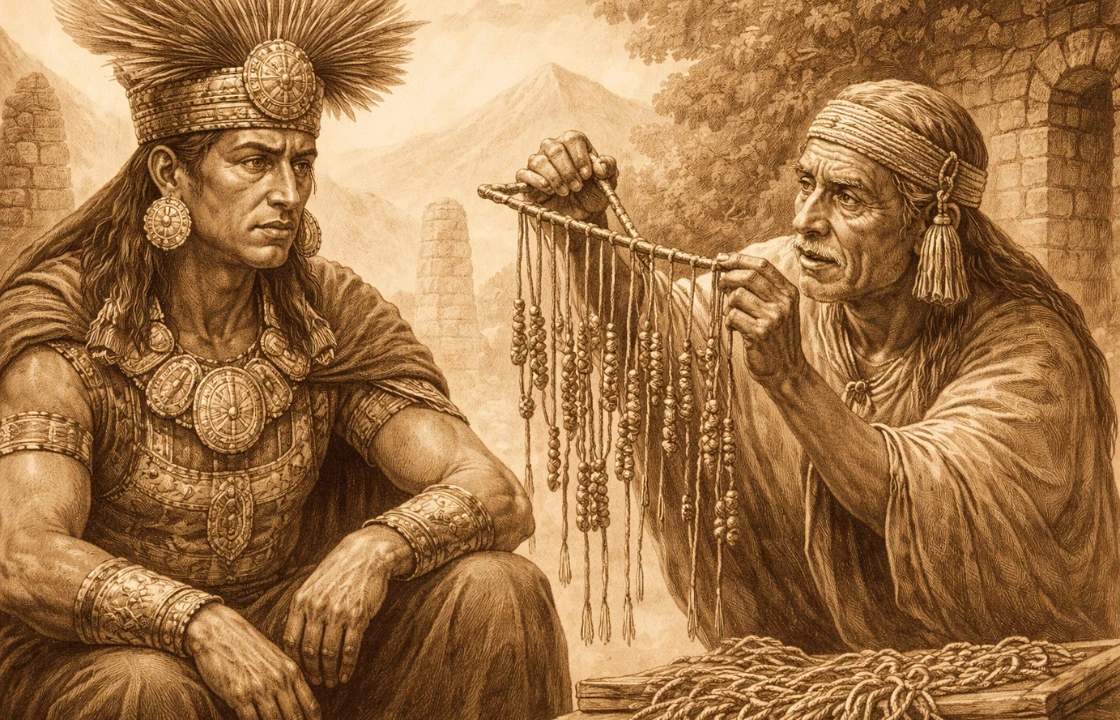
Reading and creating quipus was a specialized skill. Trained officials called Quipucamayocs were responsible for interpreting and maintaining the knot records. The word roughly translates as "quipu keeper" or "one in charge of the quipu."
Quipucamayocs were not low-ranking clerks. They held positions of real authority within the Inca administrative system. They traveled with the chasquis, relay runners who carried quipus along the royal road network, and they presented data directly to regional governors and sometimes to the Sapa Inca himself. Their knowledge was passed down through training, likely within families. When the Spanish disrupted this transmission in the 16th century, much of the ability to read quipus was lost within a generation.
Why Were Quipus So Important to the Inca Empire?
The Inca Empire, known as Tawantinsuyu, meaning "the four regions," was the largest empire in pre-Columbian America. At its peak, it covered roughly 2 million square kilometers and included diverse peoples, languages, and climates.
Governing this without a shared written language would have been extremely difficult. Quipus filled that role. They allowed the state to:
- Maintain centralized records across vast distances without physical archives in one location
- Move data quickly via the chasqui relay system, messages could travel hundreds of miles in days
- Manage food reserves and prevent famine by tracking surpluses in one region against shortages in another
- Coordinate labor projects, including the construction of Machu Picchu and Sacsayhuamán, with extraordinary precision
In a very real sense, quipus were not just a feature of the Inca Empire. They were part of the infrastructure that made the empire possible.
What Researchers Have Discovered (and What Still Puzzles Them)
Modern scholarship on quipus took a major step forward with the work of Marcia and Robert Ascher, who spent decades photographing and cataloguing quipus held in museums worldwide. Their work established the basic grammar of numerical quipus.
More recently, Harvard anthropologist Gary Urton developed a detailed binary notation system for analyzing quipu features, cord direction, ply direction, knot attachment, leading to the Khipu Database Project (KDB), which documents surviving quipus and makes the data available to researchers globally.
In 2005, Urton and colleague Carrie Brezine published research in the journal Science on quipus from the Puruchuco site near Lima. They identified a hierarchical accounting structure in which data from local quipus was summarized and consolidated into higher-level quipus, essentially the same logic as a modern spreadsheet, but in fiber.
What remains unresolved is whether some quipus also encoded language, phonetic or narrative information beyond numbers. A small number of quipus don't follow the numeric patterns and may represent something else entirely. Scholars call these "anomalous quipus," and cracking their structure would be one of the most significant breakthroughs in archaeology in decades. As of today, that code remains unbroken.
6 Fascinating Facts About Quipus
1. Zero was built in:
The absence of a knot at a given position on a cord meant zero. This made quipus one of the earliest practical applications of a zero concept in the Americas.
2. The data traveled fast:
Chasqui relay runners could carry a quipu hundreds of kilometers in a matter of days using the 40,000-kilometer Inca road network.
3. The Spanish destroyed thousands:
Colonial authorities, viewing quipus as potentially heretical or as tools for maintaining non-Christian religious practices, ordered mass destructions in the 16th century. Only an estimated 600 to 900 quipus survive today, held in museums across Peru, Europe, and the United States.
4. Some communities in the Andes used quipus into the 20th century:
In the village of San Juan de Collata in the highlands of Lima, quipus were still used as recently as the 1990s and may encode oral histories. Local authorities consider them sacred objects.
5. Colors had meaning, but we're not entirely sure what:
Cotton offered natural shades; camelid fibers were dyed. Some scholars believe specific colors consistently represented specific categories across the empire, but a universal color "key" has never been fully established.
6. The cords themselves carry information:
The direction in which the fiber was spun and plied (S-twist vs Z-twist), and the direction in which the knot was attached to the cord, may all add layers of meaning — details that are still being catalogued.
Where to See Quipus in Peru
Seeing a quipu in person is a genuinely different experience from reading about one. The texture, scale, and quiet complexity of these objects land differently when you're standing in front of them.
Lima
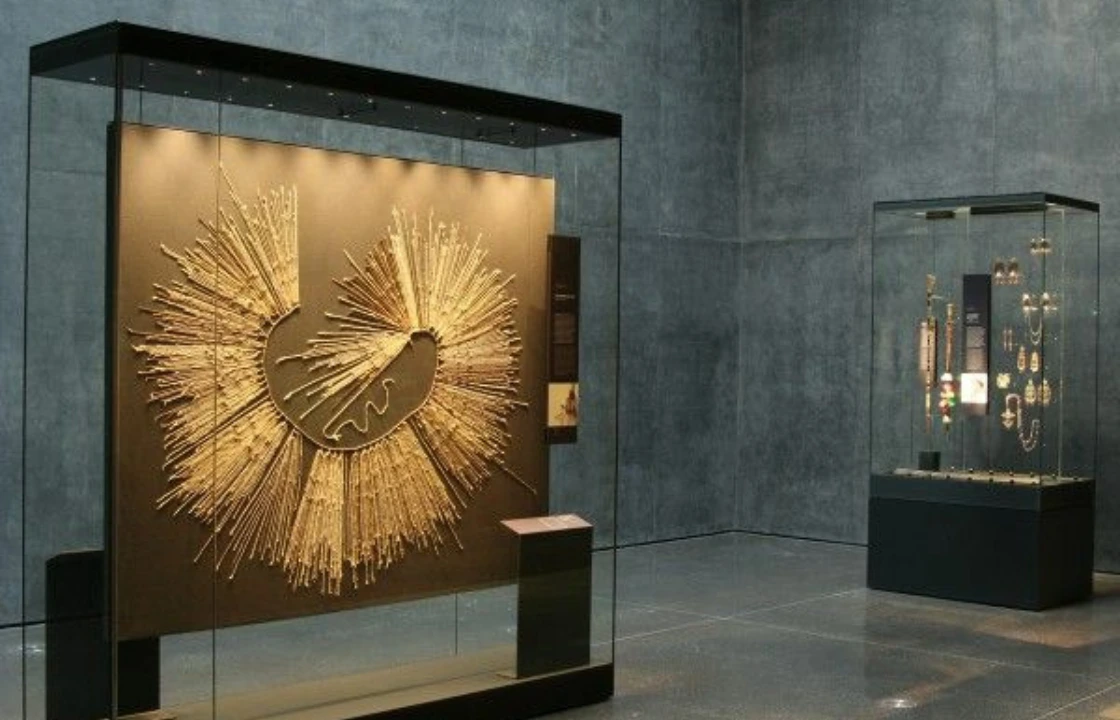
Museo Larco (Pueblo Libre district) is the best starting point for anyone interested in pre-Columbian Peru. It holds one of the world's finest collections of Andean artifacts, including quipus displayed with excellent contextual information. The museum is also unusually accessible, it has a garden café and a visible storage archive where you can see thousands of objects not usually on display.
Museo Nacional de Arqueología, Antropología e Historia del Perú (also in Pueblo Libre) is Peru's oldest national museum and holds significant archaeological collections including quipus and textile records from multiple Andean cultures.
Cusco
Museo Inka (Museo Inka de la UNSAAC), housed inside a colonial-era palace a few blocks from the Plaza de Armas, has a strong collection of Inca-period objects including quipus, bronze tools, mummies, and ceramics. The building itself, partly resting on Inca stone foundations, adds to the experience.
Near Lima: Pachacamac
The Museo de Sitio de Pachacamac, located at the Pachacamac archaeological site about 30 kilometers south of Lima, holds artifacts from this important coastal religious center, which had strong links to the Inca state.
FAQs About Quipus
Were quipus a form of writing?
Not exactly — at least not in the way we typically define writing as a system that encodes spoken language. Quipus were primarily a recording system for numerical and administrative data. However, some researchers believe certain quipus may have encoded narrative or linguistic information, and the question is still actively debated.
What kind of information did quipus store?
Clearly established: census data, resource inventories, tribute records, and labor contributions through the mita system. Possibly: histories, genealogies, laws, and ritual calendars.
How many quipus still exist today?
Approximately 600 to 900 quipus survive worldwide, held in museums and private collections in Peru, Europe, the United States, and other countries.
Have quipus been deciphered?
Quipus that record numerical data are well understood. The base-10 positional system has been thoroughly documented. What researchers have not yet been able to decode is whether some quipus also encode language or narrative content.
Why were quipus important?
They were the information infrastructure of the largest empire in pre-Columbian America. Without quipus, the Inca state could not have managed its census, economy, road network, military logistics, or labor system across such a vast and geographically extreme territory.
Where is the best place to see a quipu in Peru?
Museo Larco in Lima is the most visitor-friendly option, with strong contextual displays. Museo Inka in Cusco is excellent if you're already in the region. Both are worth your time.
Discover the Intelligence Behind the Inca Empire
The more you understand about quipus, the more the Inca Empire reveals itself as something genuinely different from what many travelers expect, not just impressive stonework, but a deeply organized civilization that solved complex administrative challenges with ingenuity.
The knots in those cords counted harvests, tracked people, moved data across mountains, and helped sustain the largest empire in the Americas. That is worth discovering in person.
Ready to explore Peru beyond the surface? Plan and book your trip directly on our web!