

Hello, dear reader! Have you ever seen a hummingbird hovering in front of a flower, a group of macaws flying over the rainforest, or an enormous condor gliding above the Andes? Peru is home to all these fascinating birds and many more!
With its Pacific coastline, high Andean mountains, cloud forests and tropical Amazon rainforest, Peru offers an incredible variety of habitats for different bird species. Some are famous for their bright colors, others for their unusual shapes, impressive flying abilities or interesting behaviors.
According to the March 2026 checklist of the Unión de Ornitólogos del Perú, the country has 1,904 confirmed bird species, making it one of the world's most remarkable destinations for bird diversity.
So, what makes Peruvian birds so special? Let's discover the different types of birds found in Peru, learn some surprising facts about them and explore the wonderful world of Amazon birdlife!
Why is Peru home to so many bird species?
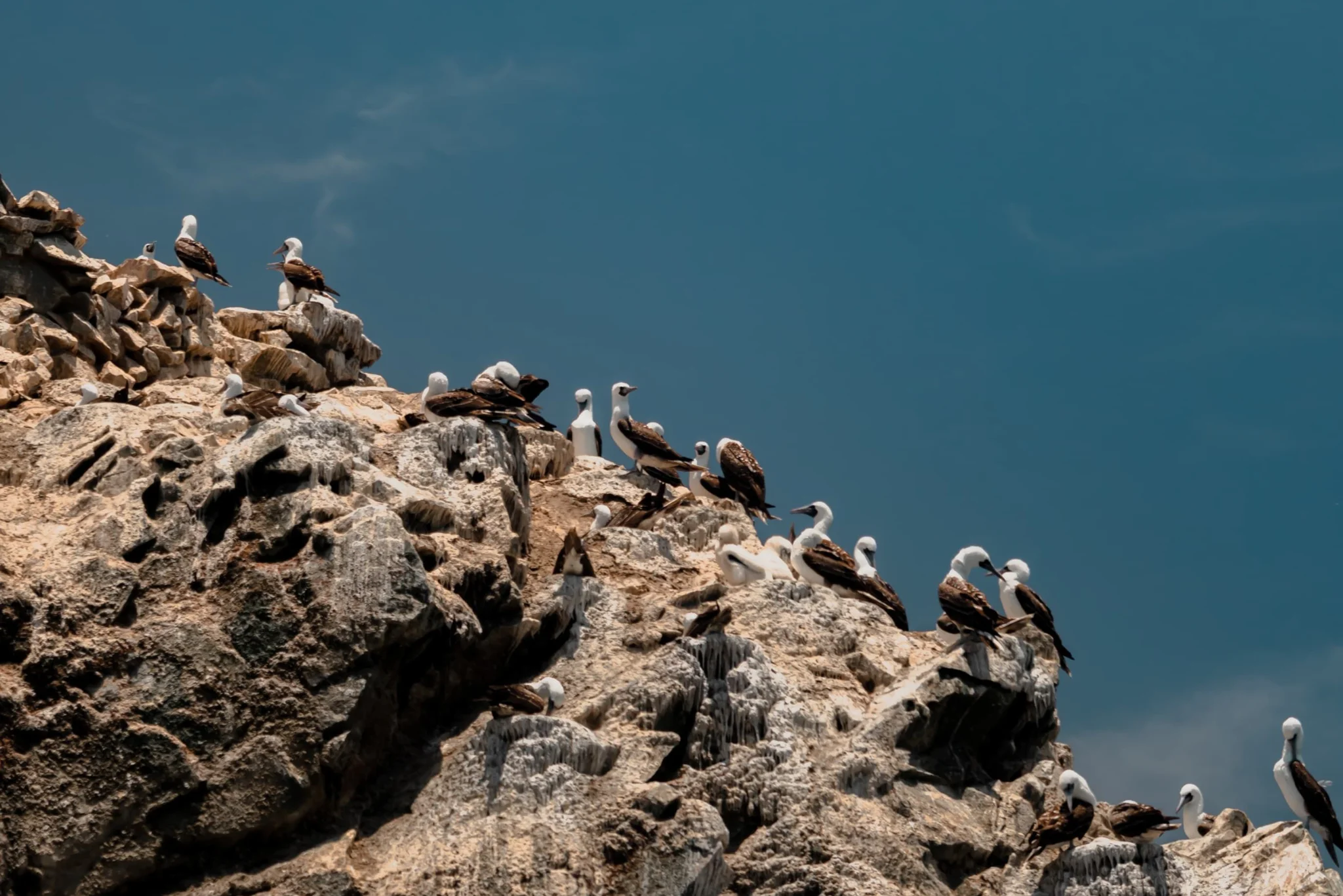
One of the main reasons Peru has such a rich bird population is its geography.
The country has several natural regions, each with different climates, vegetation and ecosystems. Along the Pacific coast, seabirds and shorebirds find food around beaches, islands and wetlands. In the Andes, birds have adapted to high altitudes, cold temperatures and thinner air.
The cloud forests provide humid environments filled with vegetation, while the Amazon rainforest offers an enormous variety of trees, rivers, wetlands and other habitats.
Each ecosystem supports different bird communities. Some species are found across large parts of South America, while others have very restricted distributions and can only be found in particular areas.
This is what makes exploring the birds of Peru so interesting: every region has something different to discover.
Types of birds found in Peru
When we talk about Peruvian birds, we are talking about much more than colorful parrots and large birds of prey. The country is home to many different bird families, each with unique characteristics and behaviors.
Here are some fascinating groups and examples worth knowing.
1. Hummingbirds: small birds with incredible flying abilities
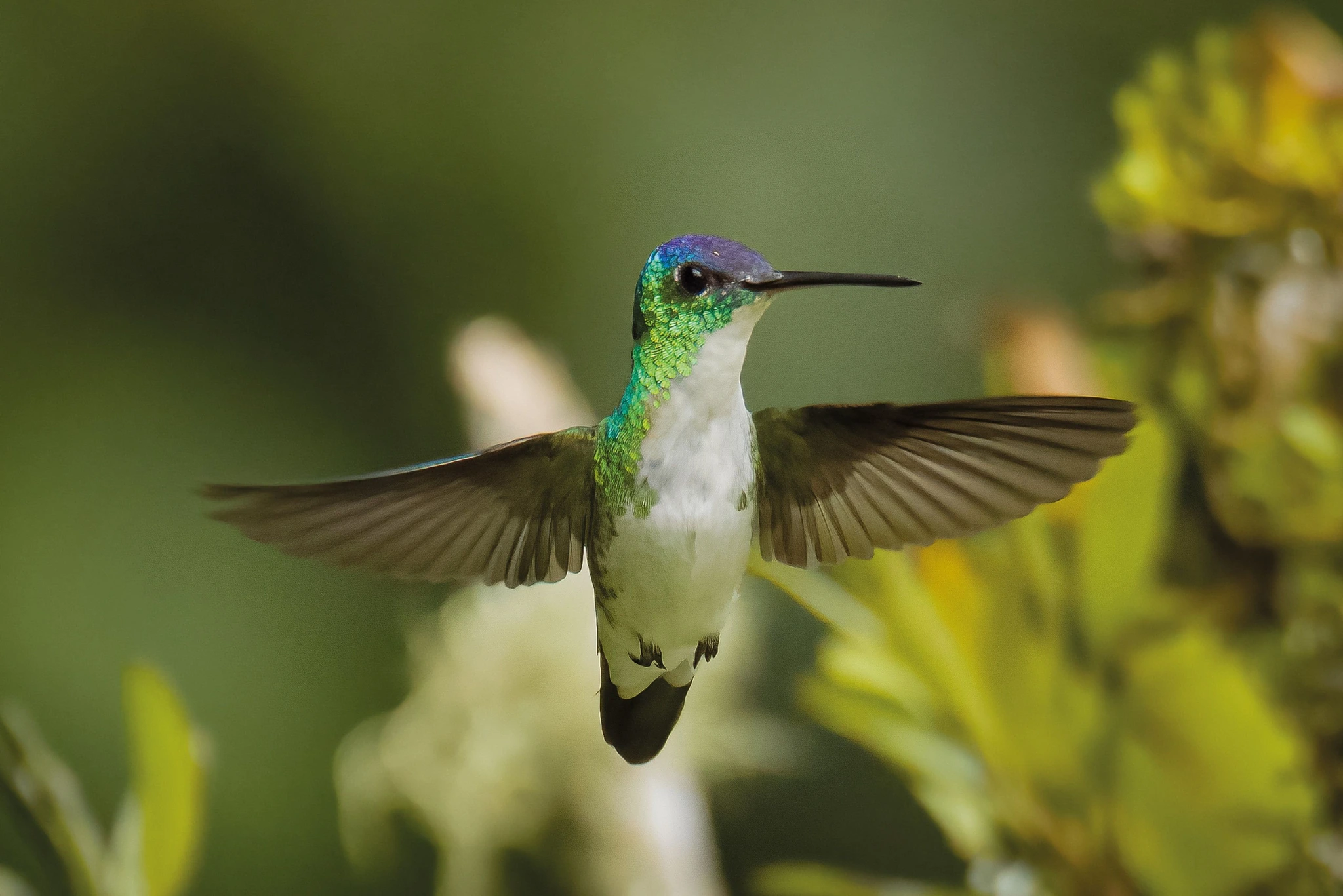
Hummingbirds are among the most fascinating birds in the Americas. They are known for their tiny bodies, fast wing movements and ability to remain almost motionless in the air while feeding on nectar.
One of their most surprising abilities is flying backwards! Their wings move in a way that allows them to hover and move in different directions while feeding.
Peru is home to many hummingbird species. One particularly remarkable example is the Marvelous Spatuletail, a hummingbird endemic to northern Peru. The male has two exceptionally long tail feathers ending in violet-blue discs, making it one of the most unusual-looking hummingbirds in the world.
Hummingbirds also play an important role in nature because they help pollinate flowers as they feed on nectar.
2. Macaws and parrots: the colorful voices of the Amazon
When people imagine Amazon birds, macaws and parrots are often among the first species that come to mind.
Macaws are large parrots with strong curved bills, long tails and bright feathers. The Scarlet Macaw, for example, is known for its striking red plumage combined with blue and yellow feathers. The Blue-and-yellow Macaw has a beautiful combination of blue upperparts and yellow underparts.
Parrots and parakeets are also common in different parts of the Peruvian Amazon. Many are social birds that communicate through loud calls and can often be seen flying in pairs or groups.
Did you know? Some macaws and other parrots visit natural clay licks, known locally as collpas. These exposed riverbank areas attract groups of birds that gather to eat mineral-rich soil. Researchers have studied this behavior because it may help birds deal with certain compounds found in their food.
3. Toucans: birds with surprisingly lightweight bills
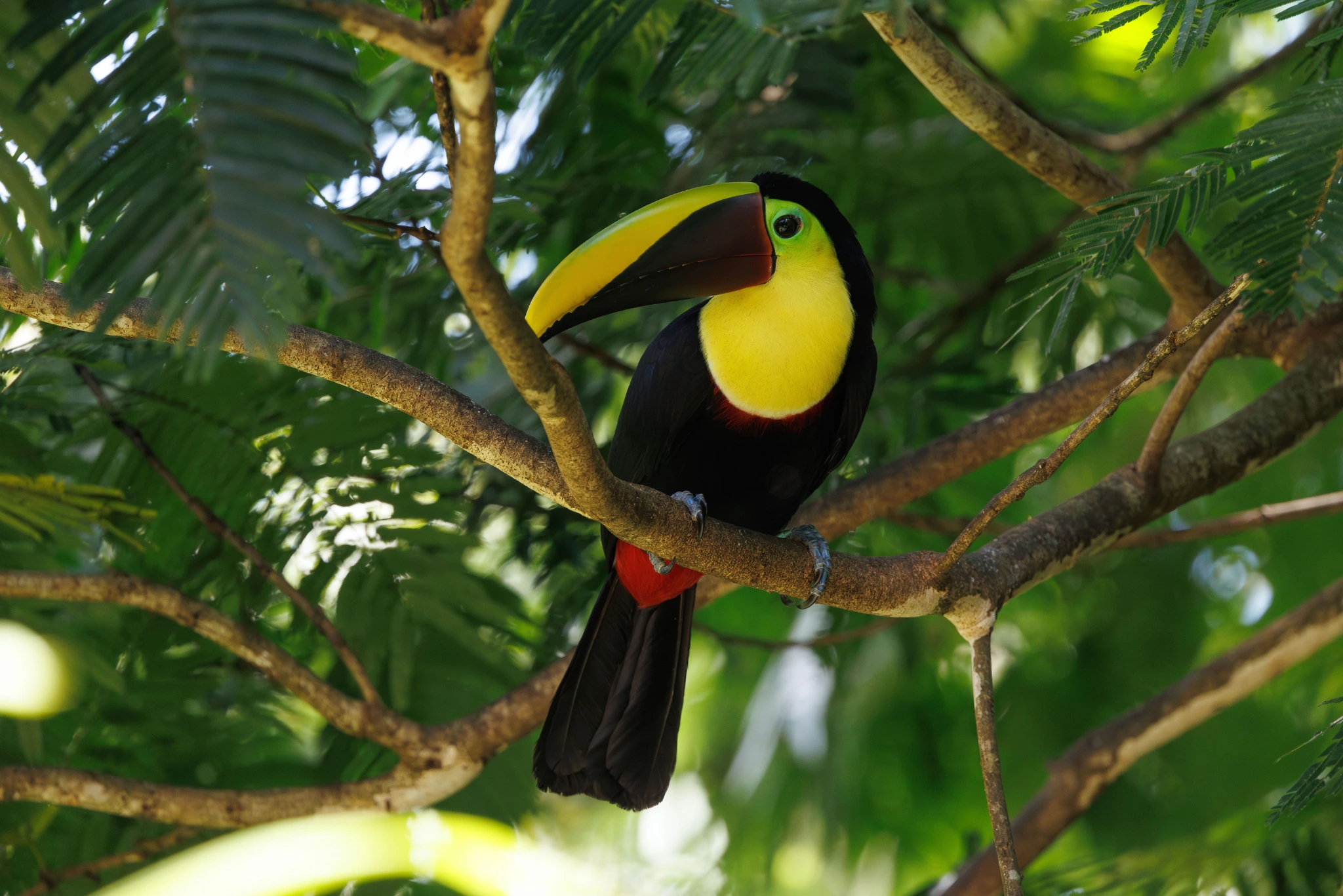
Toucans are some of the most recognizable tropical birds thanks to their large and colorful bills.
At first glance, their bills look extremely heavy, but they are actually lightweight structures. Their internal design helps reduce their weight while maintaining their shape.
Toucans mainly eat fruit, although some species also consume insects, eggs and small animals. By eating fruit and moving between trees, they can help disperse seeds throughout the forest.
Their unusual appearance makes them a favorite among people interested in Amazon birdwatching.
4. Birds of prey: powerful hunters and impressive gliders
Peru is also home to different birds of prey, including eagles, hawks and other hunting birds.
One impressive Amazon species is the Harpy Eagle, a powerful forest raptor with large talons that help it capture prey among the trees.
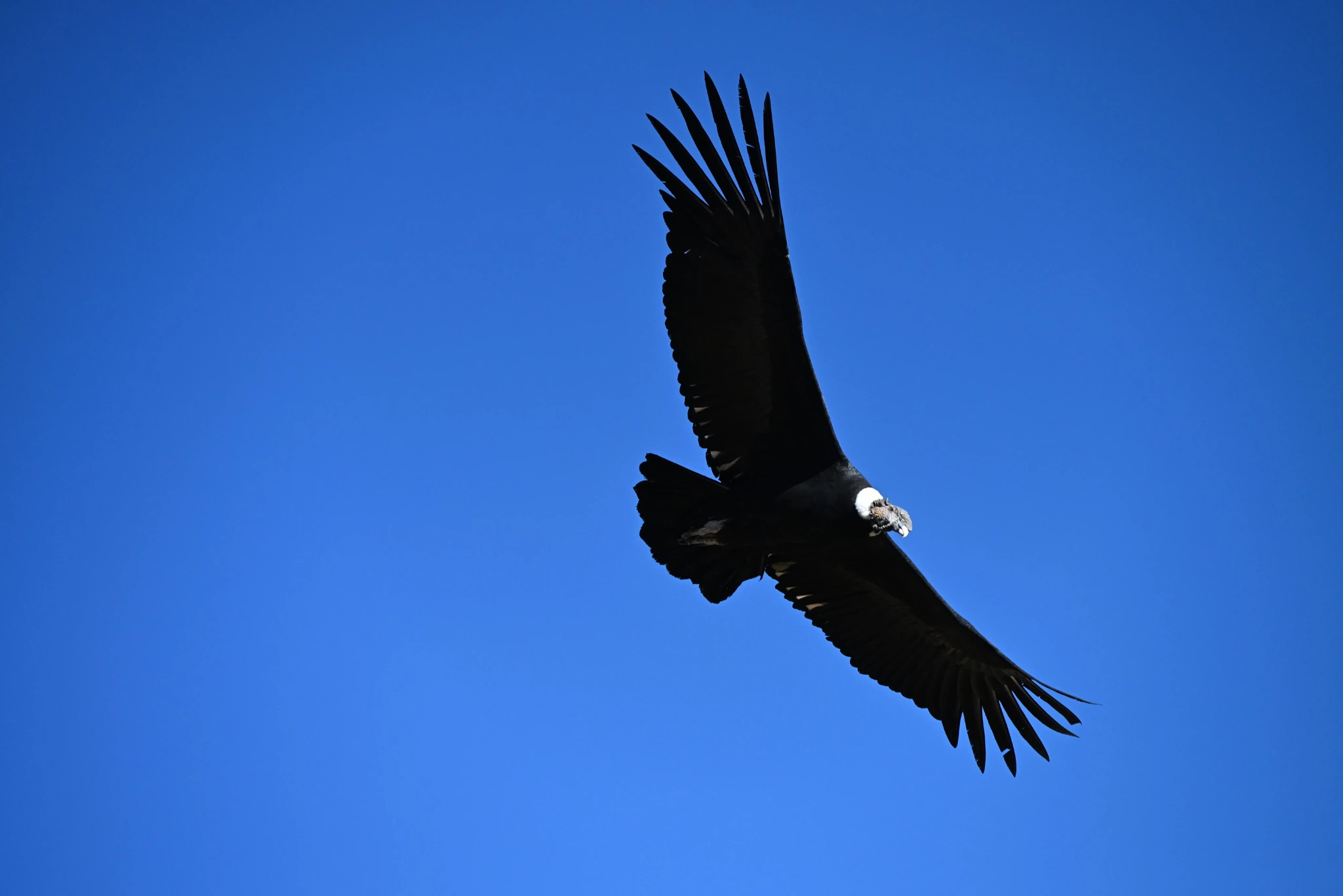
In the Andes, the Andean Condor (Vultur gryphus) is one of the most spectacular birds to observe. Its wingspan can reach approximately 3.2 meters, allowing it to glide over mountain landscapes using rising air currents.
Unlike eagles and hawks, condors are mainly scavengers. They feed on carrion, helping remove animal remains from the environment.
5. Waterbirds: life around rivers, lakes and the ocean
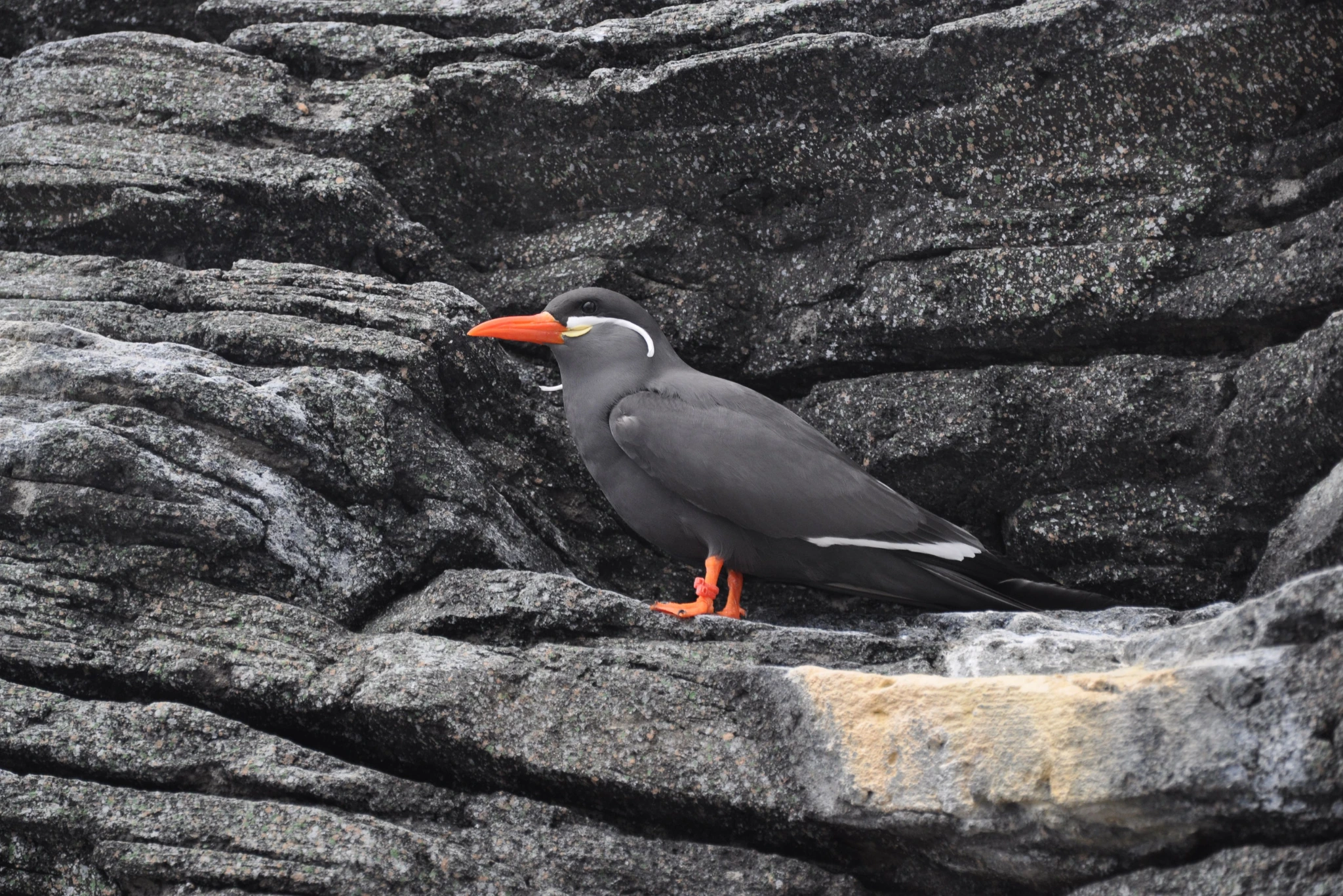
Not all Peruvian birds live in forests or mountains. Many depend on aquatic environments for food and shelter.
Pelicans, herons, cormorants, flamingos and other waterbirds can be found along the coast, around wetlands, near Andean lakes and throughout Amazonian rivers.
Their bodies and feeding habits vary considerably. Some have long legs that allow them to walk through shallow water, while others are excellent swimmers or divers.
6. Tanagers and other small forest birds
The Amazon and Andean forests are also home to many smaller birds that are easy to overlook if you only pay attention to large and colorful species.
Tanagers are known for their beautiful combinations of colors. Depending on the species, their feathers may include shades of blue, green, yellow, red and orange.
Other small forest birds, such as antbirds and flycatchers, have different feeding strategies. Some search for insects among leaves and branches, while others catch them in midair.
They may not always be easy to spot, but they are an important part of the incredible diversity of birds in Peru.
Fascinating bird behaviors you can discover in Peru
Birds are not only interesting because of how they look. Their behaviors can be just as extraordinary.
The Andean Cock-of-the-rock: Courtship performances
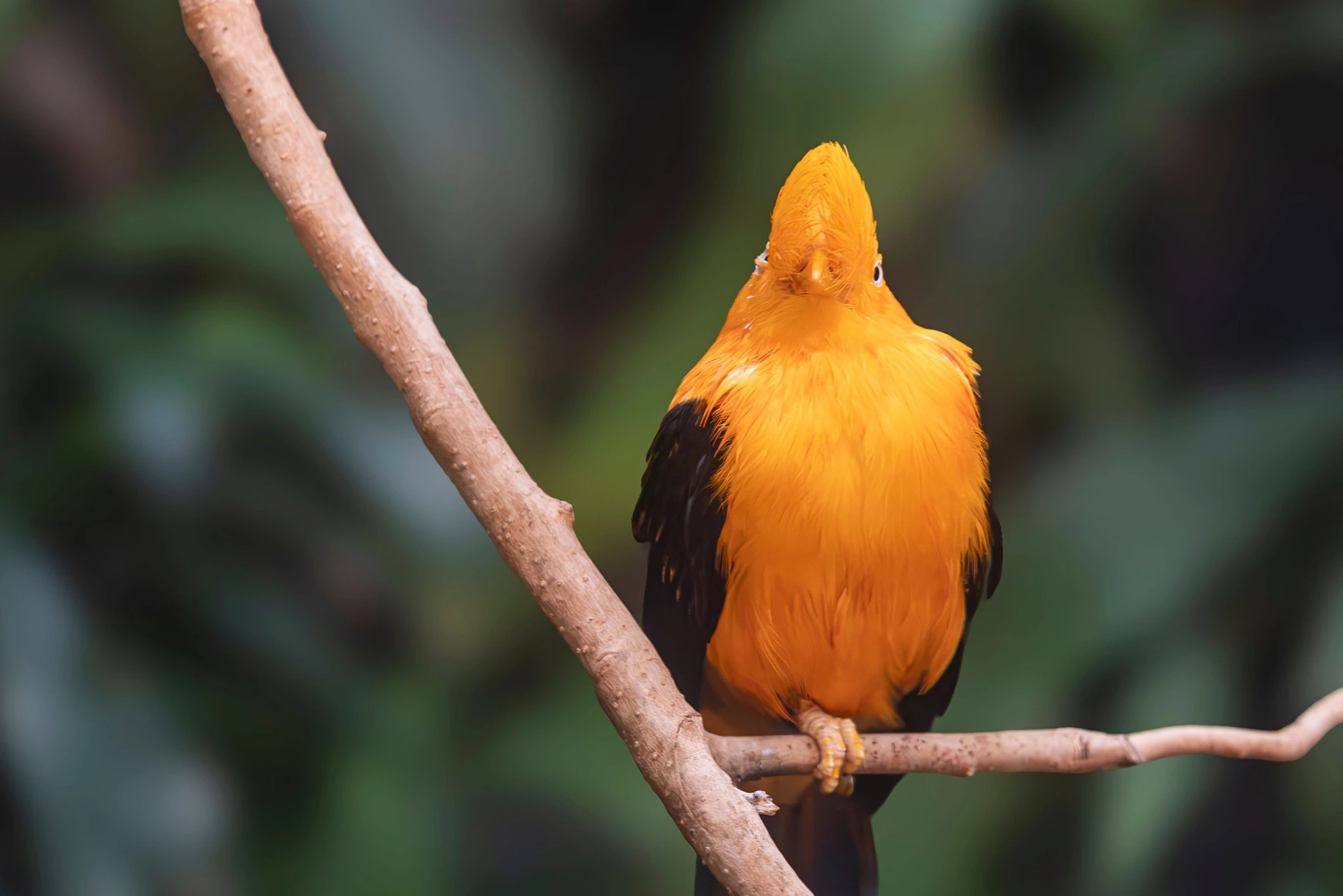
The Andean Cock-of-the-rock (Rupicola peruvianus), known in Peru as the Gallito de las Rocas, is famous for its bright orange-red plumage and distinctive crest. It is also widely recognized as Peru's national bird.
During courtship, several males gather in a shared display area called a lek. There, they jump, bow, flap their wings and make unusual sounds to attract females.
The females observe these performances and choose a mate. Once mating takes place, the female is responsible for building the nest and raising the chicks.
Macaws gather at natural clay licks
In certain areas of the Amazon, macaws and other parrots gather at exposed riverbanks known as clay licks.
Several birds may arrive in groups, calling loudly and displaying their colorful feathers as they settle on the clay banks.
The exact reasons for eating clay are still studied by researchers, but it is thought to help birds obtain minerals and may help neutralize some plant compounds in their diet.
Birds help forests grow
Fruit-eating birds can swallow fruits and later deposit their seeds in different places. This helps plants spread throughout the forest.
Hummingbirds contribute to pollination, while insect-eating birds help regulate insect populations. Scavengers such as condors also help remove animal remains.
Birds are not simply beautiful animals to observe. They are an important part of how nature works.
What birds live in the Amazon rainforest?
The Peruvian Amazon is home to an extraordinary variety of tropical birds. Its dense forests, riverbanks, wetlands and different types of vegetation provide habitats for species with very different lifestyles.
Some birds spend much of their time high in the forest canopy, while others search for food closer to the ground or around rivers.
Among the birds you may encounter are:
- Macaws: large, colorful parrots, including Scarlet Macaws and Blue-and-yellow Macaws.
- Toucans: fruit-eating birds recognized by their oversized bills.
- Harpy Eagles: powerful forest raptors that hunt in tropical rainforest environments.
- Kingfishers: birds adapted to catching fish and other aquatic prey.
- Hummingbirds: small, fast-flying birds that feed mainly on nectar.
- Trogons: forest birds with colorful plumage and a distinctive appearance.
- Woodpeckers: birds that use their strong bills to search for insects and make nesting cavities in trees.
The Amazon is also home to species with very restricted distributions. A good example is the Iquitos Gnatcatcher (Polioptila clementsi), a rare bird associated with the white-sand forests of the Allpahuayo-Mishana area near Iquitos.
Some birds depend on very particular habitats that cannot simply be replaced by another type of forest. This is one reason why protecting the Amazon is so important.
Why are birds important for the environment?
Birds are essential to the balance of many natural ecosystems. Depending on the species, they can:
- Disperse seeds: fruit-eating birds carry seeds to new areas, helping forests regenerate.
- Pollinate plants: hummingbirds transfer pollen as they visit flowers to feed.
- Control insects: insect-eating birds help regulate populations of different insects.
- Recycle nutrients: scavengers such as condors consume animal remains.
- Support food chains: birds are both predators and prey, connecting different parts of an ecosystem.
However, many bird species face threats related to habitat destruction, deforestation, pollution, illegal wildlife trade and climate change.
Protecting forests, wetlands and other natural habitats is essential to preserving Peru's extraordinary bird diversity.
Frequently Asked Questions About Birds in Peru
How many bird species are there in Peru?
According to the March 2026 checklist published by the "Unión de Ornitólogos del Perú", there are 1,904 confirmed species in the country's list, alongside 21 unconfirmed records. The number can change as new evidence and taxonomic updates are published.
What is the national bird of Peru?
The Andean Cock-of-the-rock (Rupicola peruvianus), also known as the Gallito de las Rocas, is widely recognized as Peru's national bird. The male is famous for its bright orange-red feathers and rounded crest.
What are the most common bird species found in Peru?
The answer depends on the region. Doves, pigeons, hummingbirds, herons, egrets, vultures and several types of passerines can be encountered in different parts of the country. The species you see will vary according to the habitat.
What kind of birds live in the Amazon rainforest?
The Amazon is home to macaws, parrots, toucans, hummingbirds, eagles, kingfishers, trogons, woodpeckers and many other tropical species. Some live high in the forest canopy, while others prefer riverbanks or lower vegetation.
How many bird species live in the Amazon rainforest?
The Amazon basin is home to well over a thousand bird species. The exact number depends on the geographical boundaries used when defining the Amazon region.
What is the best season for birding in Peru?
Birding is possible throughout the year, but the best conditions depend on the region and the species you want to observe. In the southern Amazon, the drier months, generally from May to October, can make forest trails easier to explore. Migratory birds also make certain periods especially interesting.
Can beginners go birdwatching in Peru?
Absolutely! You don't need previous experience to enjoy birdwatching. A knowledgeable local guide can help you identify different birds, recognize their calls and understand their behavior.
Discover Peru and it's incredible birds with Peruvian Sunrise
Peru has so much more to offer than its famous archaeological sites and mountain landscapes. Its forests, rivers and natural reserves are home to some of the most fascinating bird species in the world.
At Peruvian Sunrise, we'd love to help you discover this side of the country!
Whether you'd like to explore the rainforest around Iquitos or experience the incredible wildlife of Puerto Maldonado, we can help you plan an Amazon adventure.
Imagine waking up to the sounds of tropical birds, exploring lush forest trails and spotting colorful macaws, toucans and hummingbirds in their natural habitat.
Ready to start planning your trip?
Explore our Peru tours and get in touch with our team. We'd love to help you experience the beauty of Peru, one unforgettable sighting at a time!