

Peru held its general elections on April 12, 2026, in a nationwide process involving millions of voters both in the country and abroad. Due to logistical issues in some locations, voting was extended to April 13 to ensure participation for all affected citizens.
The 2026 election stands out as one of the most complex in recent years, with a record of 36 presidential candidates, reflecting a highly fragmented political landscape. Millions of Peruvians voted both domestically and overseas, highlighting the scale of the process.
While most polling stations operated normally, delays in the installation of some voting tables affected thousands of voters. Authorities later confirmed that around 63,000 people would be able to vote on April 13 as part of an extended process to guarantee full participation.
Early results and regional trends
Initial results from polling firms such as Ipsos and Datum Internacional show a fragmented outcome, making a runoff election highly likely.
Based on early data and regional distribution:
- Right-leaning candidates, including Keiko Fujimori and Rafael López Aliaga, show strong support across large parts of the country, especially in coastal and northern regions, as well as in key urban areas like Lima
- Left-leaning candidates, such as Roberto Sánchez and Ricardo Belmont, perform more strongly in the southern Andean regions, including areas like Cusco and surrounding regions
- Center candidates with left-leaning bases, like Jorge Nieto and Carlos Álvarez, also show important support in the south and parts of the highlands, reflecting regional political differences
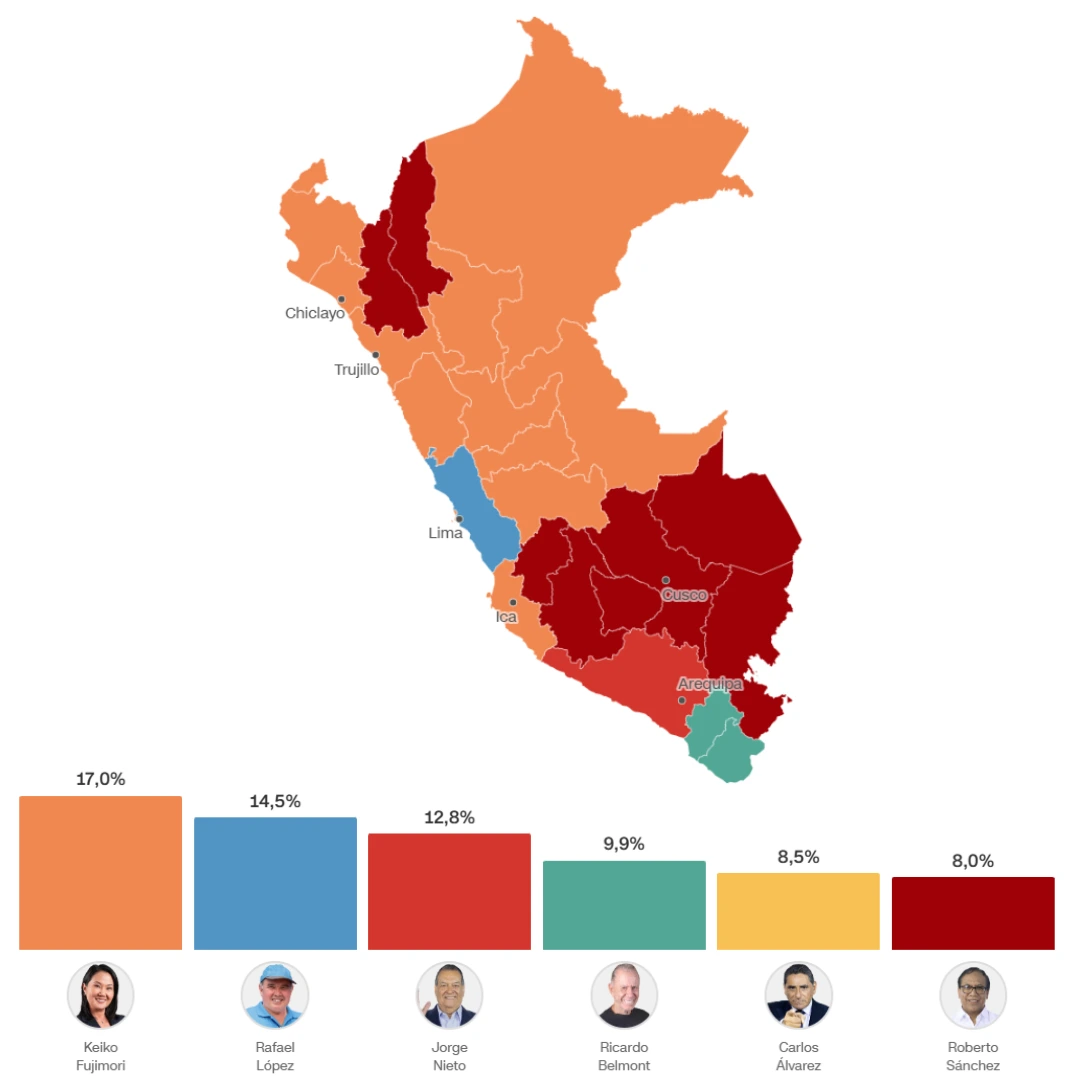
These patterns reflect broader voting tendencies in Peru:
- Right-leaning candidates tend to perform better in Lima and urban coastal areas, where there is stronger support for economic stability and private investment
- Left-leaning candidates often receive more support in the southern regions of Peru, where social policies and regional inclusion are key concerns
- Centrist candidates usually show more mixed results, with support spread across different regions without a single dominant stronghold
A process still underway
Vote counting is still ongoing, while authorities continue to ensure that all eligible voters are included after the initial delays.
Despite the complexity of the process, elections in Peru are part of the country’s normal democratic system. Daily life and tourism activities continue operating as usual across most destinations. You can follow this results by clicking on the link to the official site of ONPE: https://resultadoelectoral.onpe.gob.pe/main/resumen
Source: https://www.infobae.com/peru/2026/04/13/este-lunes-13-podran-votar-los-63-mil-electores-afectados-jne-amplia-las-elecciones/, https://cnnespanol.cnn.com/2026/04/12/latinoamerica/mapa-resultados-primera-vuelta-elecciones-peru-orix