

Recently, global travel headlines have been dominated by terms like airspace closures, flight diversions, and rerouted paths. If you’ve found yourself glued to a live flight map lately, you aren’t alone.
With significant navigation shifts across regions like the Middle East and parts of Europe, travelers are becoming their own flight dispatchers. But what do live flight trackers actually show? And more importantly: How does global airspace management keep your journey to South America safe? Continue reading!
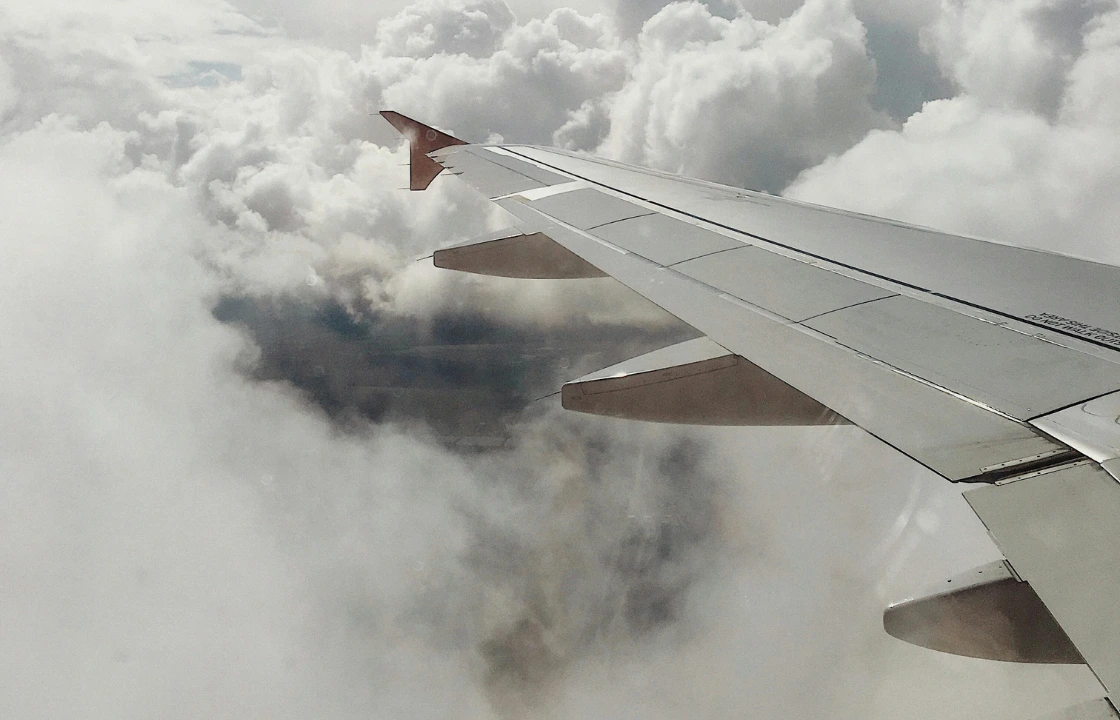
What Are Live Flight Trackers (Like Flightradar24) and Why Is Everyone Using Them?
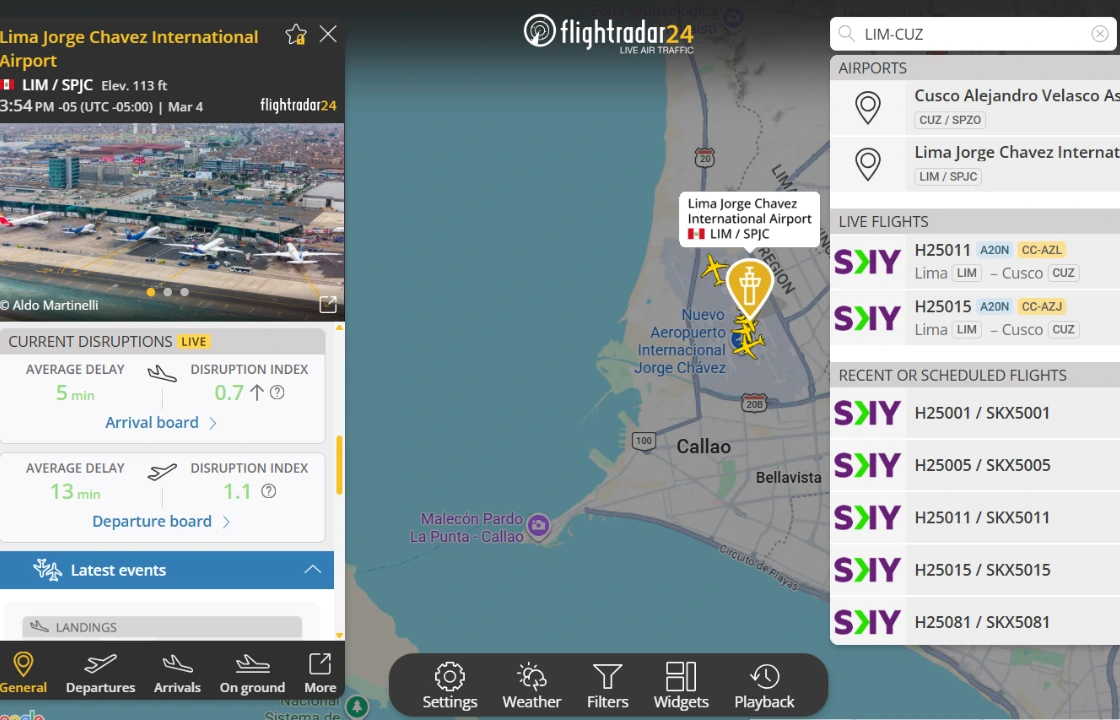
Live flight trackers are online platforms that allow users to see aircraft moving across the globe in real time. One of the most popular services currently trending is Flightradar24, though several similar tools exist.
These platforms collect data from:
- ADS-B transponders installed on aircraft
- Ground-based receivers
- Satellite tracking systems
- Air traffic control data (in certain regions)
This information is displayed on an interactive global map showing:
- Aircraft location
- Flight number
- Departure and arrival airports
- Altitude and speed
- Route changes or diversions
For travelers, this tool feels almost like a superpower. You can:
- See where your aircraft is before it even arrives at your gate
- Detect delays or holding patterns before airport boards update
- Monitor family members flying into Lima or Cusco
- Watch how airlines reroute around restricted airspace in real time
It’s not fake or speculative data, it reflects the real, verified movement of commercial aircraft across the globe.
Understanding Airspace Closures, NOTAMs, and Rerouting
When you see a “gap” on a live flight map, you’re likely looking at an airspace closure.
Airspace closures occur when aviation authorities temporarily restrict flights over specific regions due to:
- Military activity
- Political tensions
- Severe weather
- Volcanic ash clouds
- Safety risks
These restrictions are communicated through NOTAMs (Notice to Air Missions) — official alerts issued to pilots and airlines outlining hazards or closed sectors.
Here’s the key point: modern aviation is built on redundancy.
If one corridor closes, airlines immediately activate alternative routes. While this may add 30–60 minutes to a long-haul flight, safety is never compromised. Rerouting is proactive, not reactive.
That’s why some flights may appear to take unusual paths, they’re following updated Air Traffic Control instructions designed to optimize safety and traffic flow.
Does Global Airspace Rerouting Affect Travel to Peru?
The short answer: geography is your best friend!
While parts of the Eastern Hemisphere have seen increased adjustments, the primary corridors connecting North America and Europe to Peru remain among the most stable in global aviation.
Flights to Lima from hubs such as Madrid, Miami, or New York typically use:
- Transatlantic oceanic tracks
- Transpacific corridors
- South American regional airspace
These routes are thousands of miles away from current restricted zones in the Middle East or Eastern Europe.
South America continues to function as a relatively “quiet” and stable aviation region, meaning travelers heading to explore the Andes or the Amazon are not directly impacted by geopolitical airspace disruptions elsewhere.
Pro Tips for Using Live Flight Trackers Smartly
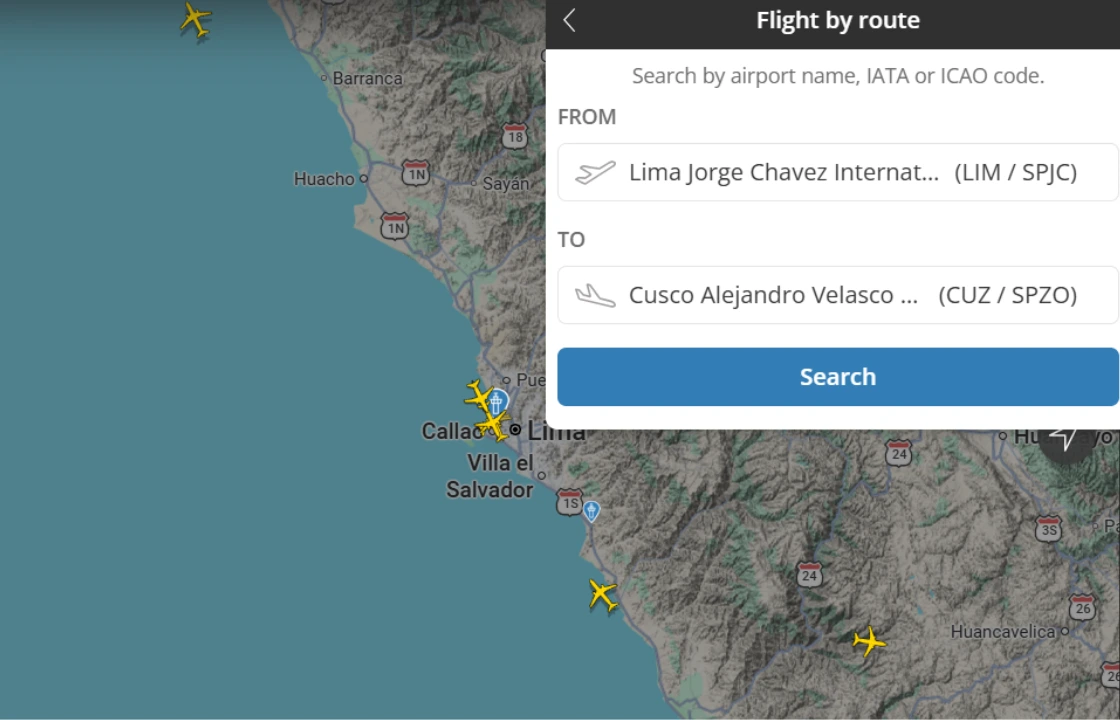
- Use the "Playback" Feature
On FlightRadar24, you can watch the last 7 days of a specific route (e.g., Madrid to Lima) to see if it’s consistently arriving on time.
- Understand Squawk Codes
If an aircraft is experiencing a minor delay or a change in plan, the transponder code might change. "7700" is for emergencies, but you'll rarely see it. Most "dramatic" looking turns on a map are simply ATC (Air Traffic Control) restrictions to manage traffic flow.
- Cross-Check with Airline Apps
While trackers are fast, your airline's internal data is the final word on gate changes and official connections.
FAQs
Does it track all flights in Peru, like the ones to Cusco or the Amazon?
Yes! It tracks almost all commercial domestic flights within Peru (such as LATAM, JetSmart, or Sky). Whether you are flying from Lima to the white city of Arequipa or heading deep into the Amazon in Iquitos, you can follow the journey live on the map.
Do I need to pay to see "airspace closures"?
No. The basic live map is free for everyone. While there are paid versions for aviation enthusiasts that offer more technical data, the free version is more than enough for a traveler to see which routes are open and where planes are currently flying.
Can my family track my flight while I’m traveling to Peru?
Absolutely. For many families, especially when a son or daughter is traveling to another continent for the first time, being able to see the flight in real time brings enormous peace of mind.
By simply sharing your flight number, parents or loved ones can follow the journey across the ocean, watch the aircraft approach the Andes, and know exactly when it has landed safely in Lima. It’s not about monitoring, it’s about reassurance.
When someone you care about is flying thousands of miles away, seeing that little plane icon moving steadily toward its destination can make the distance feel smaller and the wait much easier.
Live flight trackers only display public aviation data, so your family sees the aircraft’s progress, not personal passenger details. It’s a simple, modern way to stay connected and feel calm while your loved one begins their adventure in Peru.
Is it safe to share my flight details?
Yes. Flightradar24 only shows public aviation data (the aircraft's position and flight number). It doesn’t show personal passenger information. Sharing your flight path is a modern, smart way to stay connected with home while you enjoy your journey.