
Hello, dear reader! If you have been looking into Peru beyond the usual highlights, you may have come across Choquequirao, one of the country’s most fascinating Inca archaeological sites.
Hidden in the Vilcabamba mountains, this remote site is often called the “sister” of Machu Picchu. But Choquequirao is a very different experience, especially when it comes to getting there.
So, where exactly is it, how do you get there, and is the trek worth it? Let’s take a closer look.
What is Choquequirao?
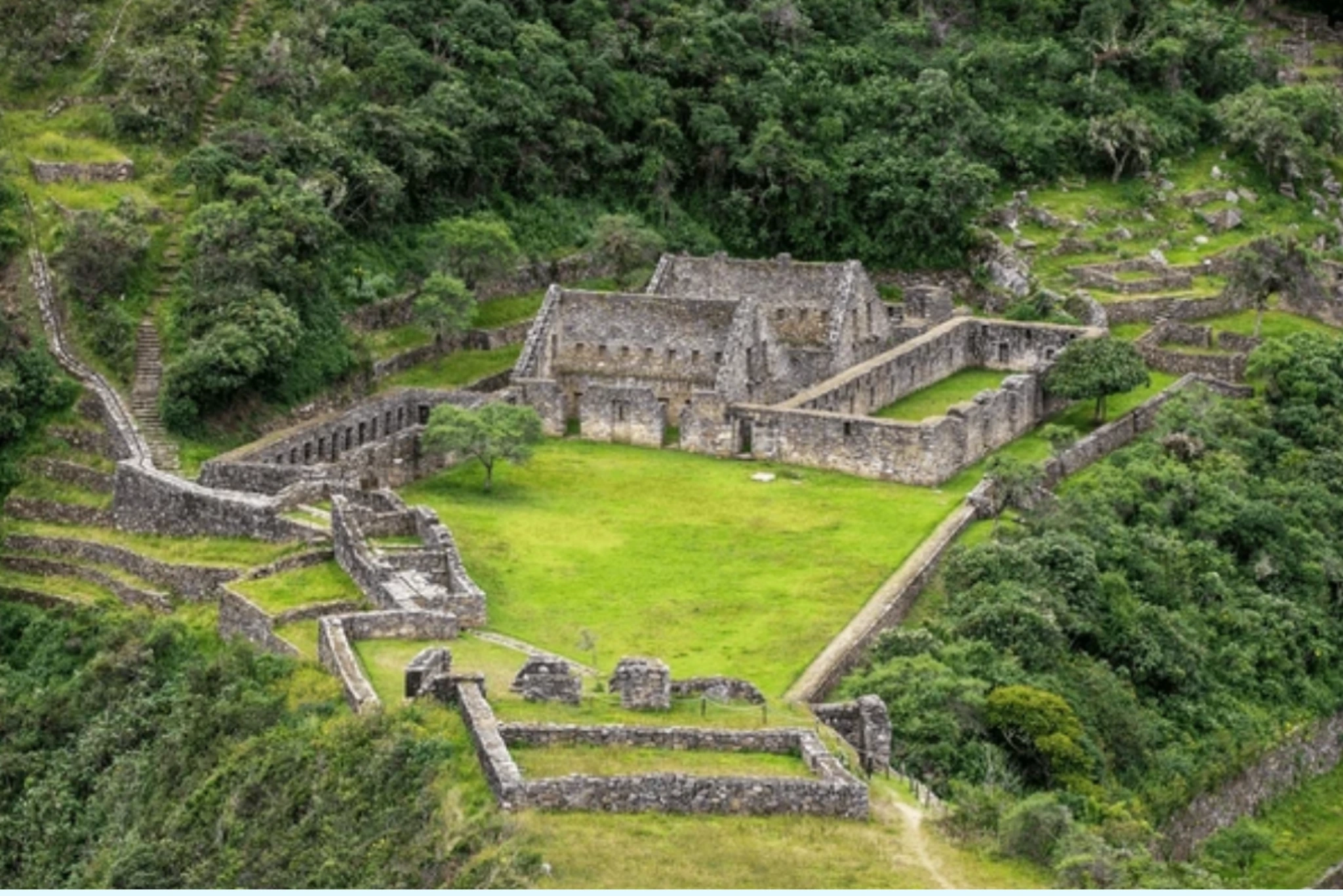
Choquequirao is a large Inca archaeological complex located in the Vilcabamba mountain range, in the region of Cusco, close to the Apurímac River Canyon.
The site sits at roughly 3,000 to 3,500 meters above sea level, depending on the area being measured, and is spread across steep mountain terrain. This dramatic location is one of the reasons Choquequirao feels so different from many other Inca sites in Peru.
Rather than being a single structure, Choquequirao is a complex of plazas, terraces, ceremonial spaces, residences, agricultural areas and other constructions built into the mountainside.
Archaeologists believe the site was developed during the later period of the Inca Empire, probably under the successors of Pachacutec. Its exact function is still a subject of study, but evidence suggests that it had important ceremonial, administrative and agricultural roles.
Today, Choquequirao is protected as an archaeological park and continues to be studied and restored.
What does Choquequirao mean?
The name Choquequirao is generally translated as “Cradle of Gold.”
The name comes from Andean languages, with choqe referring to gold and k'iraw to a cradle or cradle-like place. It is a beautiful name for a site surrounded by mountains, although the meaning should not be taken to mean that gold was found here.
There is also something interesting about the name itself: you may see different spellings, such as Choquequirao, Choqequirau or Choqekiraw, depending on the source and the way Quechua is represented in writing.
How do you pronounce Choquequirao?
If you have been wondering how to pronounce Choquequirao, don't worry. It looks much more complicated than it sounds.
The name has several syllables, and the pronunciation follows its Quechua roots rather than English spelling conventions. You will often hear it pronounced approximately as: cho-ke-kee-ra-o
The final sound is not quite the same as the Spanish “ao” in one syllable, so listening to a local guide is the easiest way to get a feel for it.
And don't worry if you don't get it perfect on your first try. Most travelers have to practice it a couple of times!
Where is Choquequirao?
Choquequirao is in the Cusco region of southern Peru, on the eastern side of the Apurímac Canyon and within the wider Vilcabamba mountain range.
It is not inside the city of Cusco, and it is not next to Machu Picchu.
The archaeological park covers a remarkably large territory across parts of Cusco and Apurímac. The monumental area visited by travelers is located high in the mountains, which is one of the main reasons reaching it requires a trek.
From Cusco, the most commonly used approach takes you towards Cachora and Capuliyoc, in the neighboring region of Apurímac. From there, the trail descends into the Apurímac Canyon before climbing again towards Choquequirao.
The road journey and the trek are both part of the adventure.
How far is Choquequirao from Cusco?
The distance depends on the route you take, but Choquequirao is roughly 160 to 170 kilometers from Cusco by road to the Cachora area, followed by several days of trekking.
That is why it is not a destination you normally visit as a quick day trip from Cusco.
For comparison, the important thing to understand is not simply the number of kilometers. The terrain is mountainous, with major changes in elevation, and the trail involves both steep descents and demanding climbs.
The traditional route from Capuliyoc to Choquequirao is generally planned over several days, allowing enough time to walk at a comfortable pace, camp or stay in local accommodation along the way, and explore the archaeological site properly.
How far is Choquequirao from Lima?
Lima and Choquequirao are separated by a considerable distance.
The easiest way to reach the area from Lima is normally to fly to Cusco first and continue by road towards the trekking route. Traveling overland from Lima would take considerably longer and is not the practical option for most international travelers.
This is one reason we recommend looking at Choquequirao as part of a wider Peru itinerary rather than as an isolated destination.
You can combine time in Lima, Cusco and the Sacred Valley with a longer trek, giving yourself enough time to enjoy each place without rushing.
Is Choquequirao in Machu Picchu?
No. Choquequirao and Machu Picchu are two different archaeological sites.
They are both associated with the Inca civilization and are located in the broader Andean landscape of southern Peru, but they are not the same place and Choquequirao is not located inside Machu Picchu.
So why do people compare them?
Both sites were built in spectacular mountain environments and contain sophisticated Inca architecture. Choquequirao is also often described as a “sister” of Machu Picchu because of certain similarities in their architecture, terraces and relationship with the surrounding landscape.
There is another important difference: Machu Picchu can be reached by train, bus and several trekking routes, while Choquequirao remains a much more remote destination.
That difference is exactly what attracts many adventurous travelers.
What makes Choquequirao special?
There is something about Choquequirao that photographs don't completely capture.
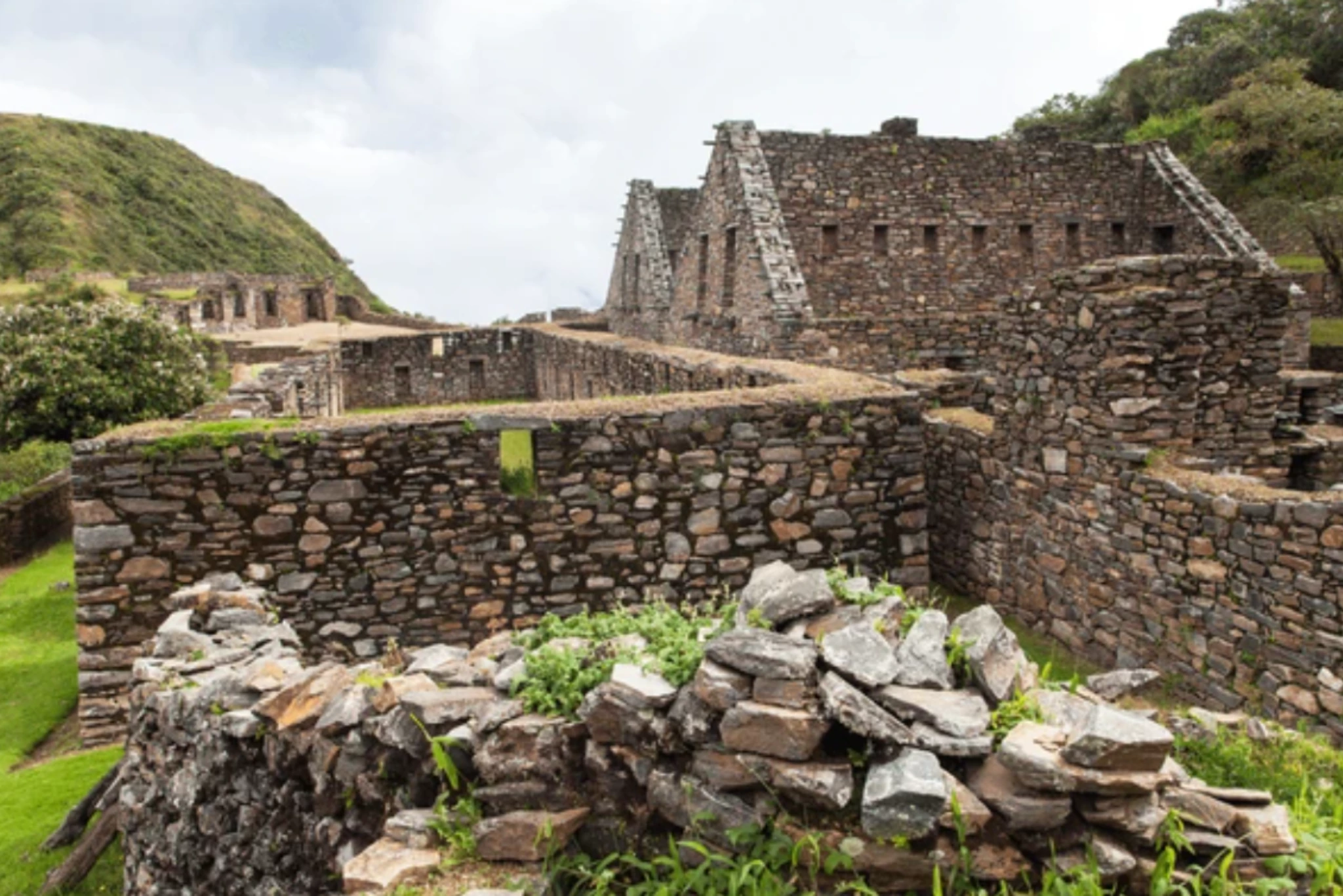
Part of its appeal is the setting. The archaeological site sits among enormous mountains, deep valleys and changing ecosystems, with the Apurímac Canyon below and the Vilcabamba range rising around it. But the ruins themselves are equally impressive. You can find large agricultural terraces, ceremonial spaces, plazas, stone buildings, water systems and residential areas distributed across different levels of the mountainside.
One of the most remarkable features is the “Llamas” sector, where white stone designs depicting llamas were incorporated into the retaining walls of the terraces. These figures are among the most distinctive details of Choquequirao and something you will want to look out for during your visit.
Recent archaeological research has also continued to shed light on how the Incas adapted their construction techniques to this exceptionally steep landscape.
Choquequirao Trek: how do you get there?
For most travelers, the classic way to visit Choquequirao begins in the Capuliyoc area near Cachora.
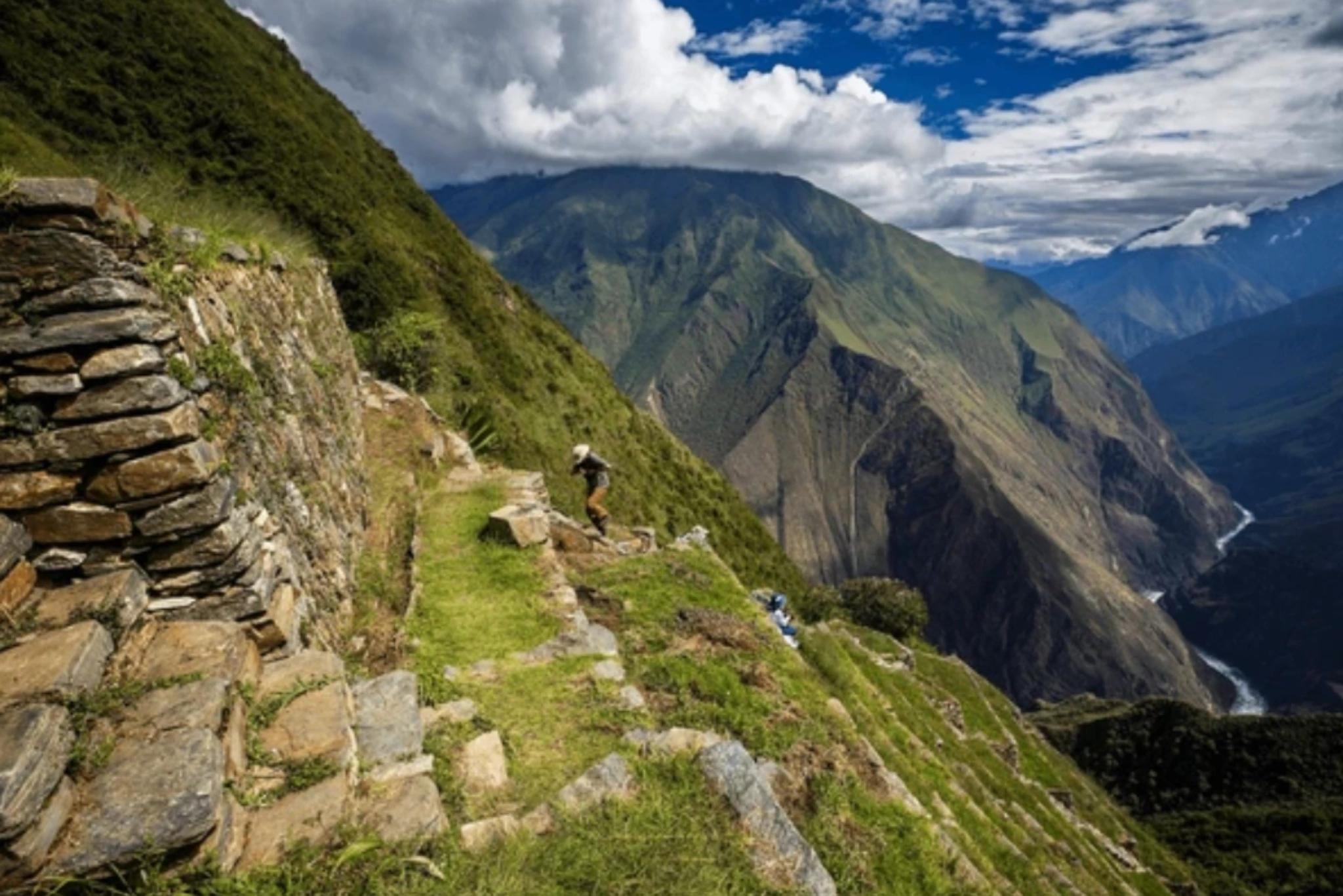
From there, the trail takes you through a dramatic change in scenery. You descend towards the Apurímac River and then climb towards the archaeological complex.This means that the trek is not simply a long uphill walk.
You will go down before going up again, sometimes under strong sun and in warm conditions at lower elevations, before reaching cooler mountain environments.The classic itinerary usually takes around four to five days for the round trip, although the exact duration depends on the route, pace and itinerary.
There are also alternative approaches to the archaeological park, including routes connected with Huanipaca and Vilcabamba. Since conditions and access routes can change, it is important to check the current regulations and trail conditions before traveling.
Can you trek from Choquequirao to Machu Picchu?
Yes, but this is not a simple extension of the classic Choquequirao trek.
There are longer trekking routes that continue from Choquequirao across the Vilcabamba mountain range and eventually connect with areas around Machu Picchu. These journeys are considerably more demanding and can take a week or more depending on the itinerary.
This option is particularly interesting for experienced hikers who want to combine two of Peru's most remarkable Inca destinations in one long adventure.
For travelers who prefer a more comfortable pace, however, we usually recommend treating Choquequirao and Machu Picchu as two distinct experiences within the same Peru itinerary.
You don't need to turn your entire vacation into one enormous trek to experience both.
How difficult is the Choquequirao Trek?
Let's be honest: Choquequirao is not an easy hike.
The challenge is not technical climbing. The trail does not require mountaineering skills, but it does require endurance.
The route includes steep ascents and descents, long walking days and considerable changes in elevation. The descent into the Apurímac Canyon can be especially demanding because everything you walk down eventually has to be climbed again.
For that reason, Choquequirao is best suited to travelers who are comfortable with several consecutive days of hiking.
If you are not an experienced trekker, that does not automatically mean you have to rule it out. With a sensible itinerary, preparation, a steady pace and the right support, many travelers can enjoy the route without treating it like a race.
The key is to plan around your abilities rather than trying to fit yourself into someone else's itinerary.
When is the best time to visit Choquequirao?
The dry season, generally from April to October, is usually the most popular period for trekking in the Cusco region.
During these months, you can expect more stable conditions and less rainfall, although mountain weather can still change quickly.
The months between May and September are especially popular for trekking because the days are often clearer. Nights can be cold at higher elevations, while lower sections of the trail may feel surprisingly warm.
If you travel during the rainy season, conditions can be more challenging, with wet and slippery sections of trail.
For any season, it is worth checking the latest weather and access information before setting out.
What should you pack for Choquequirao?
A good packing list can make a noticeable difference on a multi-day trek.
We recommend paying particular attention to:
- Comfortable, well-broken-in hiking shoes
- Lightweight clothing that can be layered
- A warm layer for cold nights
- Sun protection, including a hat, sunglasses and sunscreen
- A reusable water bottle
- Rain protection
- Personal medication and basic first-aid supplies
- A small daypack for the trail
- A headlamp
- Trekking poles if you normally use them
And one very practical piece of advice: don't overpack.
On a demanding trek, every extra item eventually becomes something you have to carry uphill.
A few things to know before visiting Choquequirao
Choquequirao is a remote archaeological destination, so expectations matter.
There are no trains taking you directly to the ruins and no road that brings you to the entrance of the monumental area. The journey requires planning.
The archaeological park currently has an official visiting schedule of 7:00 a.m. to 4:00 p.m., and visitors must follow the regulations established by the cultural authorities. For example, climbing on archaeological walls, entering with animals and flying drones without authorization are prohibited.
It is also important to remember that this is a protected cultural site. Staying on the designated paths, respecting the ruins and following your guide's instructions are simple ways to help preserve Choquequirao for future generations.
At Peruvian Sunrise, we believe that responsible travel is not only about reducing our environmental impact. It also means respecting archaeological sites, local communities and the people who help make these journeys possible.
Is Choquequirao worth visiting?
If you are looking for the easiest way to see Inca ruins, probably not, but if you are looking for a deeper experience in the Andes, Choquequirao is absolutely worth considering.
The effort required to reach it means that you experience the landscape slowly. You see the mountains change as you walk, cross different ecosystems, meet local people along the route and finally arrive at an archaeological complex that still feels remarkably remote.
And perhaps that is the best thing about Choquequirao: It does not simply give you another ancient site to photograph. It gives you the feeling that you had to earn your way there.
Plan your Peru adventure with Peruvian Sunrise
Peru has far more to offer than its most famous landmarks: From the historic streets of Lima and the fascinating landscapes around Cusco to the Sacred Valley, the Andes, the Amazon and archaeological sites such as Choquequirao, there are many different ways to experience the country.
At Peruvian Sunrise, we design personalized journeys around your interests, travel style and pace. If Choquequirao has caught your attention, we can help you understand what the trek involves and see how it could fit naturally into a larger Peru itinerary.
Ready to discover Peru beyond the usual route?
Get in touch with our team and let us help you plan a journey that feels right for you. Contact us
Frequently Asked Questions About Choquequirao
Is Choquequirao suitable for first-time trekkers?
It can be, provided you are reasonably active and prepare properly. However, it is not the trek we would recommend as a first-ever multi-day hike without some prior walking experience.
Do I need a guide for Choquequirao?
You can find independent travelers on the route, but having an experienced guide is highly recommended. A knowledgeable guide can explain the archaeological site, help with logistics and keep the journey running smoothly when conditions change.
Are there places to stay along the Choquequirao trail?
Yes. Depending on the route and itinerary, travelers can use designated campsites and simple local accommodation in areas along the trail. Your trekking company should organize the overnight arrangements in advance.
Is Choquequirao more difficult than the Inca Trail
They are different experiences, so there is no perfect one-to-one comparison. Choquequirao involves long ascents and descents and several days of trekking, making endurance particularly important.
Can older travelers visit Choquequirao?
Age by itself does not determine whether someone can do the trek. Fitness, previous hiking experience and the ability to manage several consecutive walking days are much more important. A slower, well-planned itinerary can make a significant difference.
How long should I stay in Peru if I want to visit Choquequirao?
We recommend allowing enough time to enjoy Cusco and the surrounding region before or after the trek rather than trying to fit everything into a rushed schedule. The right number of days depends on what else you would like to see in Peru.
Is Choquequirao crowded?
Compared with Machu Picchu, Choquequirao receives far fewer visitors. Its remote location and demanding access are a major part of what keeps the experience quieter and more intimate.
Is Choquequirao fully excavated?
No. Archaeological research, conservation and restoration work continue at the site. This is another reason to visit with respect and to follow the instructions of the cultural authorities and your guide.